
Why Anini Is Different
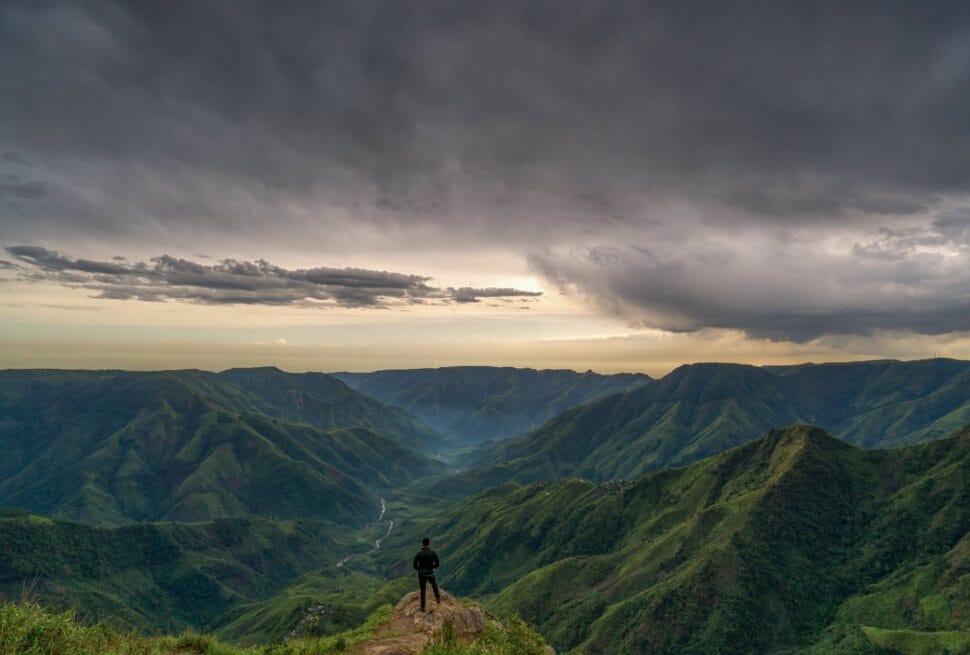
Anini, Arunachal Pradesh, is one of the most remote and fascinating destinations in the Dibang Valley. Tucked away in the eastern Himalayas and surrounded by the rugged Mishmi Hills, this small mountain town offers a very different experience from the better-known tourist destinations of Arunachal Pradesh.
Reaching Anini is not a quick weekend journey. The road itself is a major part of the adventure, winding through remote valleys, forests, rivers, waterfalls, and dramatic mountain landscapes. For travellers willing to go beyond the usual Arunachal circuit, Anini offers a rare chance to experience a quieter and less-explored side of the state.
In this Anini travel guide, we cover everything you need to plan the journey—from how to reach Anini and the best time to visit to permits, road conditions, accommodation, costs, things to see, and practical tips for travelling through the remote Dibang Valley.
If you enjoy exploring the lesser-known side of Arunachal Pradesh, you may also want to read our guide to Mago, Chuna and Gongkar La, another remote mountain journey in the state.
Planning a Trip to Anini
Because of this, getting to Anini requires more planning than a typical Arunachal trip. You need a permit, a reliable vehicle, and extra time for possible road or landslide delays. At the same time, it is important to have realistic expectations about accommodation, food, and mobile connectivity.
In this guide, you will find information on what to see, the best time to visit, how to reach Anini from Guwahati, Dibrugarh, and Roing, as well as permits, costs, safety, and practical travel tips. Ultimately, this guide will help you decide whether Anini is the right destination for your next Arunachal adventure.
Planning your first trip to Arunachal Pradesh? Our Tawang Travel Guide covers the essentials of visiting one of the state’s most popular destinations. For a quieter and more remote experience, Anini offers a very different side of Arunachal Pradesh.
Evidence key: [V] = verified from official or government sources, [A] = approximate planning figure, [R] = reconfirm before departure.
Anini, Arunachal Pradesh at a Glance
Is Anini right for this trip? A quick decision box
Anini suits you if you can give four to six days, enjoy long scenic drives, are comfortable with basic accommodation, and treat slow travel as the point.
Consider another destination if you have only a long weekend, need reliable mobile data every day, travel with someone who gets severe motion sickness or has mobility limits, or expect hotel-style comfort.
Anini at a Glance
| Detail | Information | Status |
|---|---|---|
| Location | Anini, headquarters of Dibang Valley district, Arunachal Pradesh | [V] |
| Setting | Plateau between the Dri and Mathun rivers, which join to form the Dibang River | [V] |
| Altitude | Roughly 2,000 m (about 1,970 m cited in one source) | [A] |
| Nearest major town | Roing, headquarters of Lower Dibang Valley district | [V] |
| Road distance from Roing | About 235 km per the district website’s travel page (240 km on another page of the same site; other sources say 225 km) | [V]/[R] |
| Nearest airport / station | Mohanbari (Dibrugarh) airport; Tinsukia railway station | [V] |
| Permit (Indian citizens) | Inner Line Permit (ILP) | [V] |
| Permit (foreign nationals) | Protected Area Permit (PAP) | [V] |
| Typical transport | Private car or hired Sumo/SUV from Dibrugarh or Roing; shared Sumos; limited state bus | [V]/[R] |
| Ideal duration | 4–6 days minimum from Dibrugarh | [A] |
| Connectivity | Limited; varies by operator and location | [A]/[R] |
| Accommodation style | Homestays, small guesthouses, basic lodges | [A] |
| Road conditions | Mountain road, narrow in places, prone to landslides in rain | [A]/[R] |

If you’re looking for a quieter and more remote Arunachal experience, consider Mechuka in Shi-Yomi district.
Where Is Anini? A Simple Geography
Think of the route in three parts.
1. The plains side, Assam. Most travellers start from Dibrugarh or Tinsukia in upper Assam and drive towards Roing.
2. The foothills and the pass. The Assam–Arunachal boundary at Shantipur lies about 25 km from Roing, and this is where the Dibang Valley approach begins [V]. From Roing the road climbs through the Mehao Wildlife Sanctuary area to Mayudia Pass, about 56 km away at roughly 2,655 m [A], then descends into the Dibang Valley proper. Hunli, a small town on the way, lies about 90 km from Roing [V].
3. The valley itself. Anini lies in the upper Dibang Valley, where the Dri and Mathun rivers converge to form the Dibang River. Surrounding circles include Dambuen in the Dri Valley, Mipi in the Mathu Valley, Maliney in the Talon Valley and Anelih in the Ahi Valley [V]. Maliney is described as the last motorable village in the district, about 200 km from Roing [V].
Because Anini sits beyond a high pass, weather at Mayudia matters even when the sky is clear in Roing or Anini.
Why Visit Anini?
The road is part of the destination. The drive crosses subtropical forest, a high pass and river valleys. If you are uncomfortable with long drives, the journey will be the hardest part of the trip. If you like them, it is among the best.
It is quieter than Arunachal’s headline destinations. Quiet is not the same as empty, and Anini has seen growing attention recently. But it has nothing like the footfall of Tawang’s peak season.
The Idu Mishmi culture is a real reason to go. The community is known for distinctive dress, oral traditions and festivals. The Reh festival in February is the best-known, though dates should be confirmed locally [R]. Cultural visits work best when you approach them as a guest, not a spectator.
Photography has range. River confluences, forested slopes, winter snow at higher points, village scenes and morning mist all offer material, though weather can limit visibility.
It rewards slow travel. With limited night-time activity and limited signal, Anini suits people who want walks, evenings with a homestay family and time to look at the landscape.

Best Places to Visit in and Around Anini
Access to some locations depends on weather, road conditions and permission. Treat times as planning estimates [A] and confirm locally [R].
Mayudia Pass
- What it is: The highest point on the Roing–Anini route, at about 2,655 m [A].
- Why visit: Forest views, cold air and, in winter, snowfall (commonly reported from December to February).
- Time: 1–2 hours at the pass; about 2 hours of driving from Roing.
- Practical notes: Facilities at the pass are minimal. Fog can roll in quickly. Carry warm layers and cash.
Mehao Wildlife Sanctuary and Mehao Lake
- What it is: A protected area near Roing whose altitude ranges from about 900 m to 3,500 m, centred on Mehao Lake [A].
- Why visit: Birdwatching and forest scenery. The sanctuary also contains Sally Lake.
- Time: Half a day for a short visit.
- Practical notes: Entry and trekking rules vary, so confirm permissions with the forest department or a local guide [R].
Anini Town and the Idu Mishmi Community
- What it is: The district headquarters and a small settlement on the plateau.
- Why visit: Local markets, village walks and conversations with homestay hosts.
- Time: A full day, or two for a calmer pace.
- Practical notes: Be respectful when photographing people, ceremonies or homes. Ask first.
Dri Valley (Dambuen)
- What it is: One of the main valleys of the district [V].
- Why visit: Gentler walking and river scenery.
- Practical notes: Distances and road conditions vary, so ask your driver or host before committing a day.
Mathu Valley (Mipi)
- What it is: Another of the district’s circles, with a mountain setting [V].
- Why visit: Valley scenery and village visits.
- Practical notes: Some areas near the border may require additional permissions, so check with the Deputy Commissioner’s office [R].
Maliney (Talon Valley)
- What it is: The last motorable village in the district [V].
- Why visit: The sense of travelling to the end of the road.
- Practical notes: Distances are long. This is better for adventurous or extended trips than for a standard itinerary.
Dibang Wildlife Sanctuary
- What it is: A large protected area known for biodiversity, including the Mishmi takin.
- Why visit: Nature observation for travellers with specialist interests.
- Practical notes: Access typically requires planning, guides and permissions. Do not assume casual entry [R].
Emudu 7 Lakes Trek
- What it is: A multi-day trek in the Idu Mishmi Hills run by local organisers.
- Why visit: For experienced trekkers, high-altitude lakes.
- Practical notes: This is a trek, not a day trip. Use local organisers and check the season.
Athu Popu (Kayala Pass)
- What it is: A site sacred to the Idu Mishmi community, at about 3,500 m near the border [V].
- Practical notes: This is a remote, culturally significant location, not a casual sightseeing stop. Do not plan to visit without local guidance and permission.
Worth a stop on the way: Roing, Sally Lake, Bhismaknagar
Roing is the usual overnight halt. Sally Lake is near the town, and Bhismaknagar, about 30 km from Roing, is described by Arunachal Tourism as the state’s oldest archaeological and mythological site [V].
Things to Do in Anini
- Take the scenic drive in daylight. The Roing–Mayudia–Anini route is the main activity.
- Walk short stretches near your homestay. Valley and village walks are the safest introduction to the area.
- Photograph at golden hour. Mornings are often clearer than afternoons in the hills.
- Observe birds and forest life in the Mehao area and along the route. Hire a local guide if you want identification help.
- Meet the community respectfully. Eat local food at your homestay, ask about traditions, and do not treat ceremonies as photo opportunities.
- Visit the river from safe points only. The Dibang’s tributaries are fast and cold. Stay out of the water unless a local guide says a spot is safe.
- Plan a winter snow stop at Mayudia if you travel between December and February.

Best Time to Visit Anini
No single month is best for everyone. Pick by what you want from the trip.
| Season | Conditions | Best for | Watch out for |
|---|---|---|---|
| October–November | Generally stable weather, clearer views | First-timers, photographers, general sightseers | Cold nights begin; check forecasts for the pass |
| December–February | Cold; snowfall around Mayudia and higher areas | Snow seekers, cultural travellers (Reh in February) | Road closures or delays, shorter daylight, colder rooms |
| March–May | Warming weather; clearer than monsoon | Birdwatchers, general travellers who want milder days | Variable weather, spring showers |
| June–September | Monsoon rainfall in the region | Experienced travellers only | Landslide risk, road blockages, leeches in forests, poor views |
Snowfall dates differ by source, from November to March, with the heaviest reports in January and February. Treat snow as likely in winter, never guaranteed [A].
For a first visit, October–November and March–April are the easiest choices. Choose December–February only if you are prepared for delays.

How to Reach Anini
Anini is one of the most remote destinations in Arunachal Pradesh. There is no railway station or commercial airport in Anini, so most travellers first reach Roing and then continue by road to Anini in Dibang Valley.
The final stretch is long and can be affected by road conditions, weather and landslides. If you are travelling to Anini, keep a full day for the Roing–Anini journey and avoid relying solely on online map timings.
Guwahati to Anini
Travellers from Guwahati generally have two practical options for reaching Anini.
By air or rail: Travel from Guwahati to Dibrugarh or Tinsukia, then continue by road towards Roing and Anini. This can save considerable travel time compared with driving the entire distance from Guwahati.
By road: Guwahati to Dibrugarh is roughly 430–450 km by road. Most travellers complete this as a long driving day before continuing towards Roing.
A practical itinerary is:
Guwahati → Dibrugarh/Tinsukia → Roing → Anini
Dibrugarh to Anini
Dibrugarh is one of the most convenient gateways for travellers arriving by air.
From Dibrugarh, continue by road towards Roing, the main gateway to Dibang Valley. Depending on traffic, road conditions and stops, the journey to Roing can take several hours.
For a more comfortable trip, stay overnight in Roing and begin the Roing–Anini journey early the next morning.
Tinsukia to Anini
Tinsukia is another useful railhead for travellers heading towards Dibang Valley.
From Tinsukia, travel by road towards Roing and then continue to Anini.
A practical route is:
Tinsukia → Roing → Anini
As with the Dibrugarh route, staying overnight in Roing is generally more practical than attempting the entire journey to Anini in one stretch.
Roing to Anini
The Roing to Anini journey is the most important part of the route.
The official distance is approximately 235 km, but the journey can take much longer than the distance suggests because of mountainous terrain, road conditions, weather, stops and possible delays.
The broad route passes through:
Roing → Mayudia → Hunli → Anini
The distance is misleading: although Roing and Anini are only about 235 km apart by road, this is not a normal highway journey. Mountain terrain, bends, road conditions, weather and occasional delays make the journey much slower than the distance suggests.
Mayudia is roughly 56 km from Roing, while Hunli lies further along the route towards Anini.
Allow a full day for the Roing–Anini journey. Around 9–12 hours can be a sensible planning assumption under variable conditions, but actual travel time can be considerably different.
Do not depend entirely on Google Maps or other navigation apps for the journey time. Road conditions in remote mountainous areas can change quickly.
Start early from Roing and plan to reach Anini before dark whenever possible.
Anini by Shared Sumo
For travellers without a private vehicle, shared Sumo services from Roing are one of the traditional ways to travel towards Anini.
However, departure times, availability and operating arrangements can change. Ask locally in Roing and confirm the service the day before your journey.
Shared transport can be a practical and economical option, but it may involve waiting for passengers and less flexibility regarding stops.
Anini by Private Car or SUV
Hiring a private car or SUV with an experienced local driver is a more comfortable option, particularly for families, groups and travellers carrying luggage.
A local driver familiar with the Dibang Valley route can be particularly useful because weather, road conditions and delays can change the journey considerably.
If travelling by private vehicle:
- Refuel in Roing before starting the journey to Anini.
- Start early in the morning.
- Carry sufficient drinking water and food.
- Keep extra time for unexpected road delays.
- Avoid planning to drive after dark.
Can You Reach Anini by Bike?
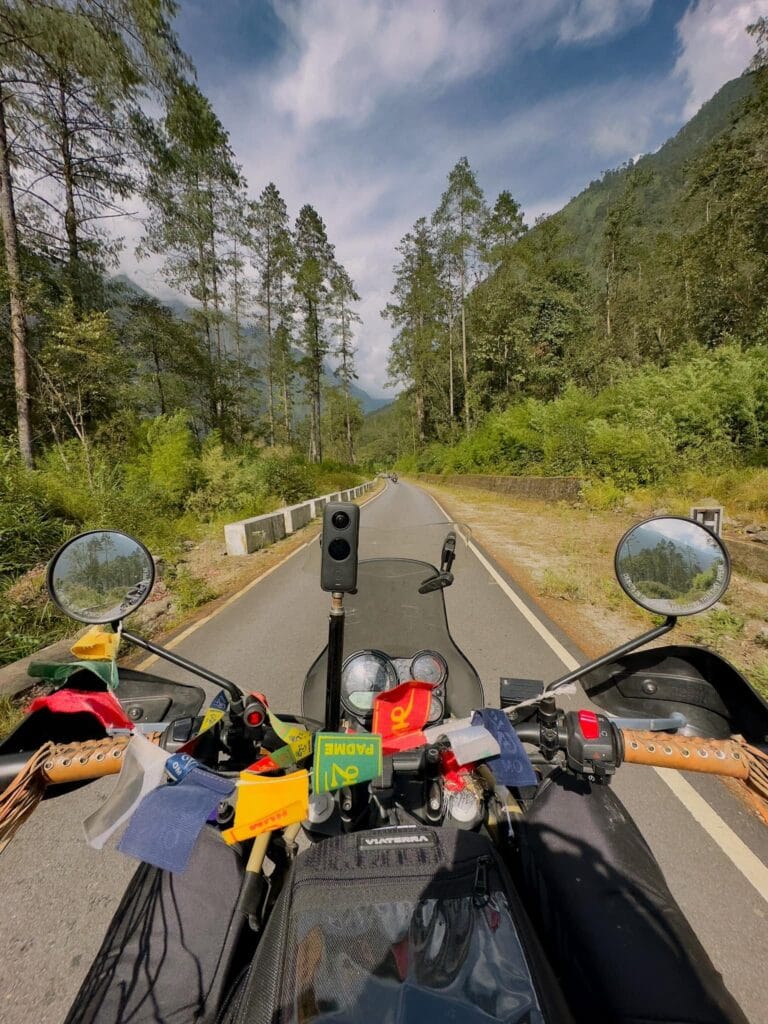
Yes, Anini can be reached by motorcycle, but the journey is challenging and requires careful preparation.
Experienced riders should be prepared for changing weather, difficult road conditions, limited fuel availability, possible landslides and long stretches where assistance may not be readily available.
Carry essential tools, puncture-repair equipment, spare parts and sufficient supplies.
The route is not recommended for beginner riders.
Anini by Bus or Helicopter
According to information published by the district administration, travellers have had access to state bus services from Roing and seasonal helicopter services.
However, these services may operate according to changing schedules and seasonal conditions. A bus service announced from Roing in January 2021, for example, should not be assumed to be operating today.
Always reconfirm the current schedule and availability before travelling.
Travel Tips for the Roing–Anini Journey
The Roing–Anini road journey requires more preparation than a typical tourist route.
Keep these points in mind:
- Start from Roing as early as possible.
- Refuel before leaving Roing.
- Carry water and snacks.
- Carry a power bank and torch.
- Keep basic medicines with you.
- Allow extra time for bad weather and road delays.
- Do not rely completely on mobile connectivity or navigation apps.
- Check local road conditions before departure.
- Avoid driving after dark.
- Use a driver experienced in mountain roads if you are unfamiliar with the route.
Important: Road conditions and public transport services in Dibang Valley can change. Confirm the latest road, transport and weather situation locally before beginning the Roing–Anini journey.
| Starting Point | Main Route | Practical Plan |
|---|---|---|
| Guwahati | Guwahati → Dibrugarh/Tinsukia → Roing → Anini | Best divided into multiple stages. Reach Roing first and continue to Anini. |
| Dibrugarh | Dibrugarh → Roing → Anini | Overnight in Roing is recommended for a more comfortable journey. |
| Tinsukia | Tinsukia → Roing → Anini | Overnight in Roing is recommended before continuing to Anini. |
| Roing | Roing → Mayudia → Hunli → Anini | Allow a full day for the journey. Mayudia can be included as a scenic stop or optional detour. |

Want to See Anini Without Solving Every Permit and Road Stop Yourself?
TripHubGo plans journeys across Northeast India, and Anini is one of the trips where planning matters most. If you want help with permits, vehicle choice, overnight stops and a pace that suits your group, share your dates, group size and travel style and we will help you build a practical plan.
Enquire about an Anini itinerary
Anini Travel Route and Suggested Itineraries
A 3-day Anini trip from Dibrugarh is unrealistic for most travellers. You would spend most of it in a vehicle. Three days works only if you start from Roing and accept a rushed pace.
4 Days (minimum from Dibrugarh)
- Day 1: Dibrugarh → Roing. Rest.
- Day 2: Roing → Mayudia → Anini. Full driving day.
- Day 3: Anini and nearby valley. Local sightseeing.
- Day 4: Anini → Roing, then onward.
5 Days (recommended)
- Day 1: Dibrugarh → Roing. Sally Lake or Bhismaknagar if time permits.
- Day 2: Roing → Anini via Mayudia.
- Day 3: Full day in Anini: town, village walk, culture.
- Day 4: Dri or Mathu Valley day trip, depending on road conditions.
- Day 5: Anini → Roing, then onward.
Five days gives you enough time to reach Anini without turning the trip into a race, spend a full day exploring, and keep some flexibility for road/weather delays.
6 Days (relaxed)
- Days 1–2: As above.
- Day 3: Anini town and culture.
- Day 4: Valley excursion.
- Day 5: Buffer day for weather or extra exploration.
- Day 6: Return via Roing.
A buffer day is more useful than another attraction, because weather delays on this road are common.
Anini Travel Cost
Figures below are indicative planning ranges, not quotes. Prices vary by season, vehicle type, group size and accommodation.
| Item | Indicative range | Notes |
|---|---|---|
| ILP (Indian tourists) | ₹300 for up to 3 days; ₹500 for 4–14 days [V] | Plus any online transaction charges [R] |
| Dibrugarh–Roing–Anini–Dibrugarh private vehicle | Largest single cost; varies with vehicle, season and days | [A], quotes vary widely |
| Shared Sumo, Roing–Anini | Considerably cheaper than private hire | [A]/[R] |
| Accommodation | Homestays and basic guesthouses; rates vary by season and meals | [A] |
| Food | Often bundled with homestay meals | [A] |
| Local sightseeing | Depends on vehicle use and any guide | [A] |
| Contingency | Keep a buffer for delays, extra nights and cash needs | [A] |
Costs rise in peak winter and fall for larger groups sharing a vehicle.
Permits for Anini
Everyone who is not a resident of Arunachal Pradesh needs a permit.
- Indian citizens: an Inner Line Permit (ILP). The district website lists applying online, through the Deputy Commissioner or liaison offices (including Guwahati and Dibrugarh), and a temporary ILP at the Shantipur border checkpost [V].
- Foreign nationals: a Protected Area Permit (PAP), obtained through Indian missions abroad, the Ministry of Home Affairs or the state’s Home Commissioner [V]. Rules for foreign visitors change, so check the current position before booking [R].
- Fees: The tourist e-ILP has been reported at ₹300 for up to 3 days and ₹500 for 4 to 14 days [V].
- Which districts to select: Choose the districts you will pass through, including Lower Dibang Valley and Dibang Valley.
- Children: Some guides report that children aged 14 and above need a separate ILP. Confirm this for your group [R].
- Border areas: Some locations near international borders may need additional permission beyond the standard ILP. Ask the district administration.
- Portal address: Sources currently list two official-looking portal addresses (arunachalilp.com and eilp.arunachal.gov.in). Check which one is current on the Arunachal Pradesh government site before paying, because only official portals are safe [R].
Carry printed and digital copies, plus original photo ID.
Travellers should check the current Arunachal Pradesh entry-permit requirements before travelling to Anini. Indian visitors generally require an ILP, while foreign visitors are subject to separate protected-area requirements.
Where to Stay in Anini
Anini does not have luxury resorts. Expect homestays, small guesthouses and basic lodges.
- Homestays: Often the best option, with home-cooked meals and local conversation. Facilities are simple.
- Guesthouses and lodges: Basic rooms, with hot water and heating that can be limited.
- Availability: Rooms are limited, especially in winter and around festivals. Book ahead.
- Facilities: Power cuts and weak internet are possible. Do not assume heating beyond what the host confirms.
Confirm room type, meals, water supply and heating before arrival.

Food and Connectivity
- Food: Mostly simple meals of rice, dal, vegetables, meat and local preparations, often at your homestay. Restaurant choice is limited.
- Supplies: Stock essentials such as medicines, snacks and chargers in Roing or Dibrugarh.
- Mobile network: Coverage is patchy and varies by operator. Expect gaps on the road and in valleys. Inform family of your plan, and download offline maps.
- Internet: Limited and sometimes unreliable.
- Cash and ATMs: Carry sufficient cash from Roing or earlier. Digital payments depend on signal.
Safety and Responsible Travel
- Roads: Narrow mountain roads, occasional landslides and sharp turns. Use an experienced driver.
- Weather: Fog and rain can change conditions quickly. Keep schedule buffers.
- Night driving: Avoid it.
- Rivers: Do not swim in or cross the fast-flowing rivers.
- Emergencies: Medical facilities are limited. Carry a basic first-aid kit, personal medicines and emergency contacts.
- Altitude: Anini and the pass are at moderate elevation, and some people notice altitude effects at Mayudia.
- Community respect: Ask before photographing people or ceremonies. Dress modestly in villages.
- Waste: Carry your waste back. Avoid single-use plastic.
- Sacred sites: Treat them as sacred, not as attractions.
Who Should Visit Anini?
| Traveller | Verdict |
|---|---|
| Couples | Good for quiet travel, if comfortable with basic stays |
| Families | Possible with older children; the long drive is tiring for young ones |
| Photographers | Strong option, with weather-dependent results |
| Adventure travellers | Good base for treks, with organised support |
| Senior travellers | Possible with a comfortable pace, doctor’s advice and buffer days |
| Bikers | Only experienced riders who plan fuel and weather |
| Road-trip enthusiasts | An excellent fit |
| First-time Arunachal visitors | Better to start with a more accessible destination |
Anini vs Tawang, Ziro and Mechuka
These are general characterisations, not rankings.
| Factor | Anini | Tawang | Ziro | Mechuka |
|---|---|---|---|---|
| Trip style | Remote road journey | Monastery and high-pass circuit | Plateau and village culture | Remote valley |
| Accessibility | Long, demanding drive | More established route | Easier, via Itanagar side | Remote |
| Infrastructure | Basic | More developed | Moderate | Basic |
| Crowds | Low | Higher in season | Moderate | Low |
| Best for | Slow, offbeat travel | Culture and high-altitude scenery | Culture and relaxed travel | Remote valley seekers |
Anini is not the right choice for everyone. If you want monasteries and more services, Tawang is a better fit.
Frequently Asked Questions
Is Anini worth visiting?
Yes, if you value remote mountain travel and can accept long drives and basic stays. It is not ideal for short trips.
Where is Anini located?
In Dibang Valley district, eastern Arunachal Pradesh, on a plateau between the Dri and Mathun rivers.
How do I reach Anini?
Fly or take a train to Dibrugarh or Tinsukia, drive to Roing, then travel by road to Anini, roughly 235 km.
How many days are enough?
Four days at minimum, with five to six recommended.
What is the best time to visit?
October–November and March–April for general travel; December–February for snow, with more road risk.
Does Anini get snow?
Snowfall is commonly reported around Mayudia Pass and higher areas in winter, though not guaranteed.
Is Anini safe for tourists?
Generally yes, with the main risks being road and weather conditions.
Do I need a permit?
Yes. Indian citizens need an ILP; foreign nationals need a PAP.
Is it suitable for families?
Yes, with older children and a relaxed pace.
Is there mobile network?
Limited and patchy. Plan accordingly.
Where can I stay?
Homestays, guesthouses and basic lodges. Book ahead.
How much does a trip cost?
It depends on vehicle, season and group size. Transport is the largest cost.
Can I go by bike?
Experienced riders can, with careful planning.
Can I go without a private vehicle?
Shared Sumos from Roing are the main option. Confirm schedules.
What should I carry?
Warm layers, rain gear, permits and ID, cash, medicines, a power bank and offline maps.
Is Anini open throughout the year?
Accessible in principle, but monsoon and winter conditions can disrupt travel.
About TripHubGo
TripHubGo plans journeys across Northeast India. This guide draws on official district and tourism sources and reputable travel publications, and we mark what travellers should reconfirm before departure.
Photography Credits
All photographs featured in this Anini article are captured by Deep Brahma, a passionate photographer from Kokrajhar, Assam, with over 12 years of experience in photography. An accomplished butterfly photographer and avid traveller, Deep has travelled extensively across India and Nepal, documenting the beauty of nature, wildlife, landscapes, and the places he encounters along the way.
His photographs bring a personal and authentic perspective to Anini, capturing the region’s breathtaking landscapes and natural beauty through his lens.
Follow Deep Brahma


Plan Your Anini Journey with TripHubGo
Tell us your dates, group size and travel style, and we will help you build a practical itinerary, with permits, transport and overnight stops matched to your pace.
Chat with TripHubGo on WhatsApp