
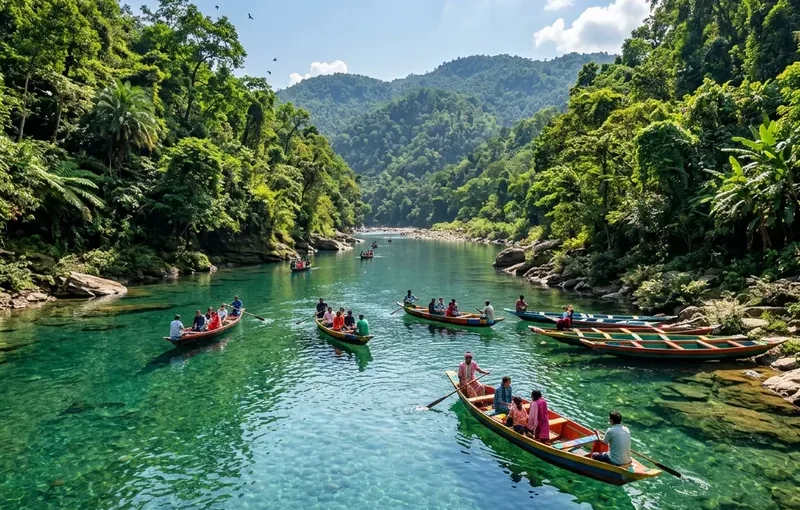
A three-day Meghalaya road trip from Guwahati through Shillong, Laitlum, Sohra, Mawlynnong and Dawki, based on my own travel experience.
My 3 day Meghalaya itinerary takes you from Guwahati to Shillong, Laitlum, Sohra, Dawki, Mawlynnong and Lumer Pynngad, combining scenic mountain roads, spectacular waterfalls, peaceful villages and memorable experiences across Meghalaya. This 3-day Meghalaya trip from Guwahati is ideal for travellers who want to experience Shillong, Sohra, Mawlynnong and Dawki in a compact road-trip itinerary.
Rather than rushing through the usual tourist checklist, I wanted to experience Meghalaya at a slower pace—following winding mountain roads, stopping beside waterfalls, walking through villages and ending each day in peaceful homestays surrounded by the hills.
This is the story of that journey.
This is the story of that journey.
3-Day Meghalaya Itinerary at a Glance
Day 1: Guwahati → Shillong → Laitlum → Sohra
Start from Guwahati and travel towards Shillong, visiting Laitlum before continuing to Sohra.
Guwahati → Rani → Nongstoin → Shillong → Laitlum → Sohra → Kynrem Falls → Sohra Homestay
Day 2: Explore Sohra and its Waterfalls
Spend the day exploring the waterfalls and scenic attractions around Sohra.
Sohra → Dainthlen Falls → Wei Sawdong Falls → Nohkalikai Falls → Prut Waterfall → Janilar Natural Swimming Pool → Umtynger
Day 3: Mawlynnong → Dawki → Guwahati
Visit Mawlynnong and Dawki before beginning the return journey towards Guwahati.
Umtynger → Mawlynnong → Living Root Bridge → Dawki → Tamabil → Indo-Bangladesh Border → Lumer Pynngad → Khanapara → Guwahati
Are 3 Days Enough for a Meghalaya Trip?
Three days is enough to experience some of Meghalaya’s most popular highlights, including Shillong, Laitlum, Sohra, Mawlynnong and Dawki. This itinerary is designed for travellers who want to cover these places in a relatively short road trip. If you prefer a slower pace, longer walks, caves or more village experiences, extending the trip to four or five days would be a better option.
Day 1: Guwahati to Shillong, Laitlum and Sohra
Taking the road less travelled from Guwahati
The journey of our 3 day Meghalaya itinerary began in Guwahati, but instead of taking the usual route towards Shillong through the busy city stretch, we travelled through Rani and Nongstoin.
It turned out to be an excellent decision.
One of the biggest advantages was avoiding the traffic around Shillong's Police Bazaar area. The journey felt less stressful, and the changing landscape made the drive itself part of the experience.
As we moved deeper into Meghalaya, the scenery gradually transformed. The plains gave way to green hills, winding roads and clouds hanging low over the mountains.
And then came Shillong.
Shillong: The gateway to Meghalaya
Often called the "Scotland of the East," the city combines mountain landscapes with a lively urban character. But on this trip, Shillong was not our final destination. It was the beginning of our journey deeper into Meghalaya.
After a short stop, we continued towards Laitlum.
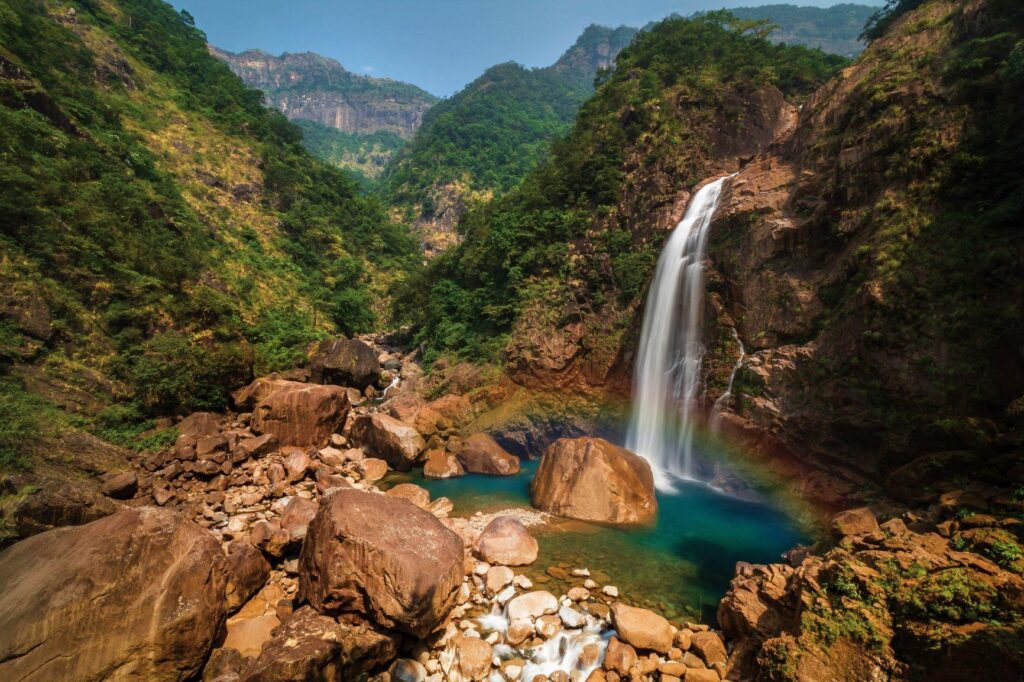
Laitlum: Standing Above the Clouds
Laitlum was one of the first places where I truly felt the vastness of Meghalaya. The endless layers of green hills, deep valleys and distant villages were a world away from Shillong’s busy streets.
There was silence, wind, and a view that made you stop and simply take it all in.
From Laitlum, we continued towards Sohra, better known as Cherrapunji.
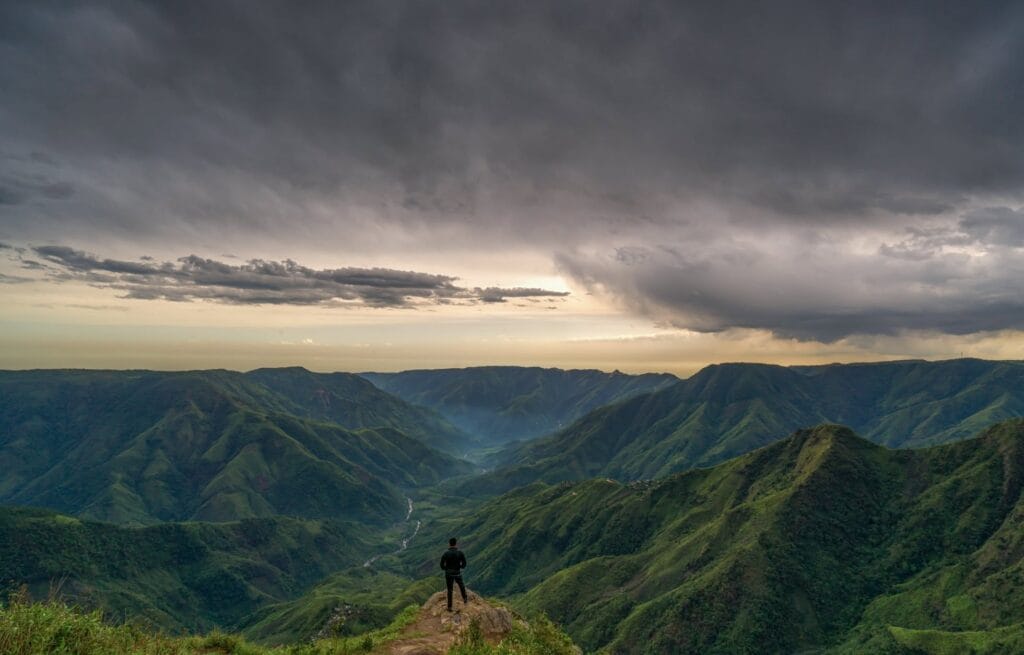
Sohra and Kynrem Falls
By the time we reached Sohra, the landscape had changed dramatically. The cooler weather, thick clouds and dramatic roads added to its charm.
Our first stop was Kynrem Falls, cascading through lush green cliffs and mist-covered hills—a perfect introduction to Sohra’s waterfall country.
By evening, we headed to our cosy homestay in Sohra.
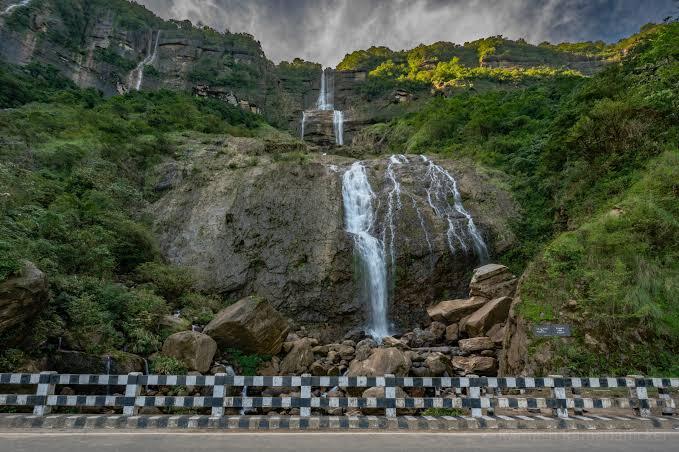
A cosy homestay in Sohra
After a long day on the road, the homestay was exactly what we needed.
There was something special about ending the day in a quiet, cosy place surrounded by Meghalaya’s hills rather than returning to a busy hotel in a city.
The peaceful surroundings, simple hospitality and cool mountain air made the evening feel completely different from everyday life.
We rested early because the next day was going to be all about waterfalls.
Day 2: Chasing Waterfalls Around Sohra
Day two was probably the most spectacular part of the journey.
Sohra is often described as the land of waterfalls, and after spending the day exploring them, I understood why.
Our route took us through some of Meghalaya's most dramatic natural attractions.
Dainthlen Falls
Our first major stop was Dainthlen Falls.
The waterfall is surrounded by lush greenery and dramatic rock formations. Unlike some of the more crowded attractions, there is something peaceful about simply standing near Dainthlen and listening to the sound of falling water.
The surrounding landscape makes the experience even better.
It feels wild, open and wonderfully untouched.
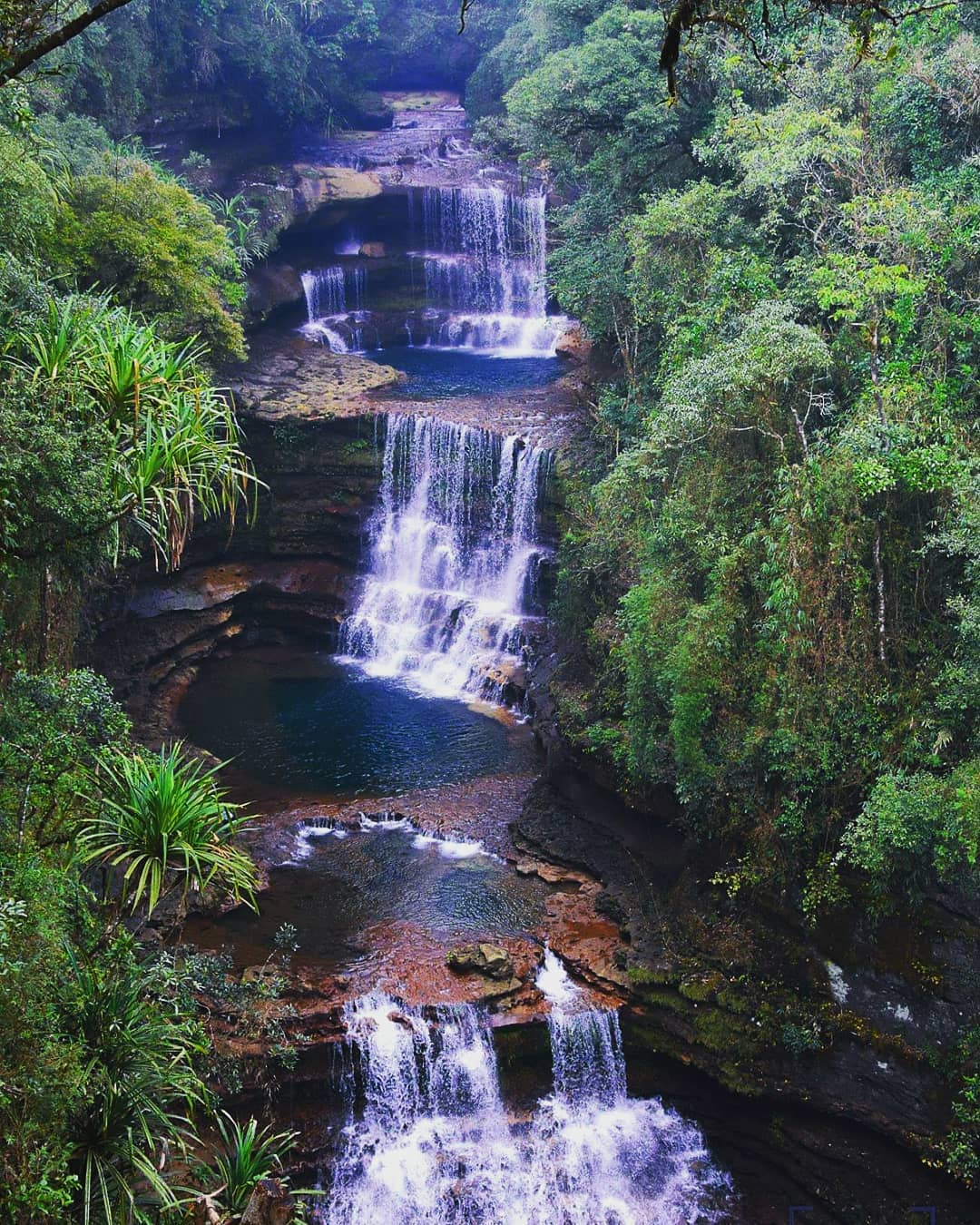
Wei Sawdong Falls: Meghalaya's Hidden Treasure
If I had to choose one waterfall that left the strongest impression on me, Wei Sawdong Falls would be very high on the list.
The waterfall is tucked into a dramatic natural setting, with water cascading through multiple levels of rocky terrain.
The blue-green colour of the pools makes it look almost unreal.
Getting there requires some effort, but that is part of the experience. The journey down towards the falls builds anticipation, and when the waterfall finally comes into view, the effort feels completely worth it.
Wei Sawdong reminded me that some of the best places are not necessarily the easiest ones to reach.
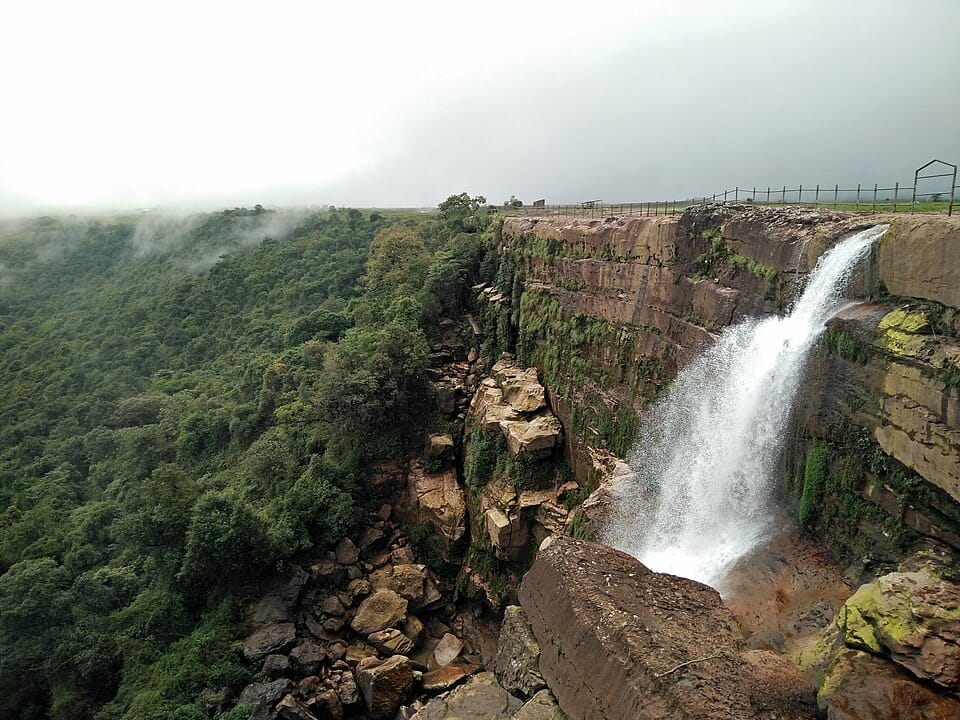
Nohkalikai Falls: Meghalaya's Iconic View
No trip to Sohra would feel complete without visiting Nohkalikai Falls.
The waterfall plunges dramatically from the green plateau into the pool below, creating one of Meghalaya’s most iconic landscapes.
Standing at the viewpoint, surrounded by misty clouds and the sound of falling water, is an experience that photographs simply cannot capture.
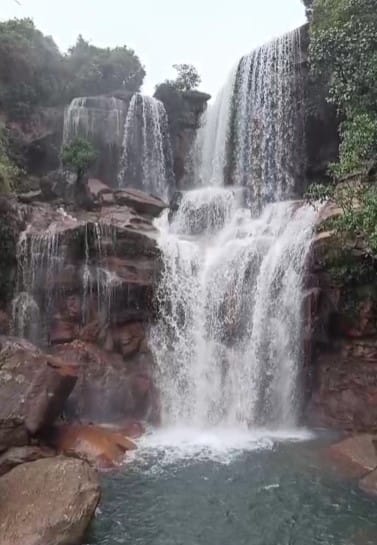
Prut Waterfall
Our waterfall trail continued with Prut Waterfall, another beautiful stop surrounded by Meghalaya's characteristic greenery.
One thing I loved about travelling around Sohra was that the journey never felt like simply moving from one attraction to another.
There were streams, cliffs, forests, villages and unexpected views everywhere.
The road itself became part of the sightseeing.
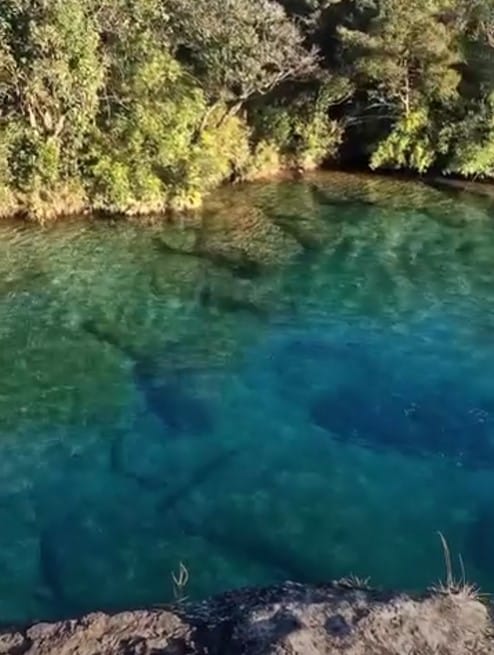
Janilar Natural Swimming Pool
After spending so much time around waterfalls, ending the day at Janilar Natural Swimming Pool was a completely different experience.
The natural surroundings made it an ideal place to slow down and enjoy the landscape.
By the end of the day, we were tired but satisfied.
We left Sohra and spent the night at Umtynger, preparing for another long day.
Day 3: Mawlynnong, Dawki and the Indo-Bangladesh Border
The third day was different from the first two.
Instead of concentrating only on waterfalls and viewpoints, the journey took us through villages, forests, rivers and the international border.
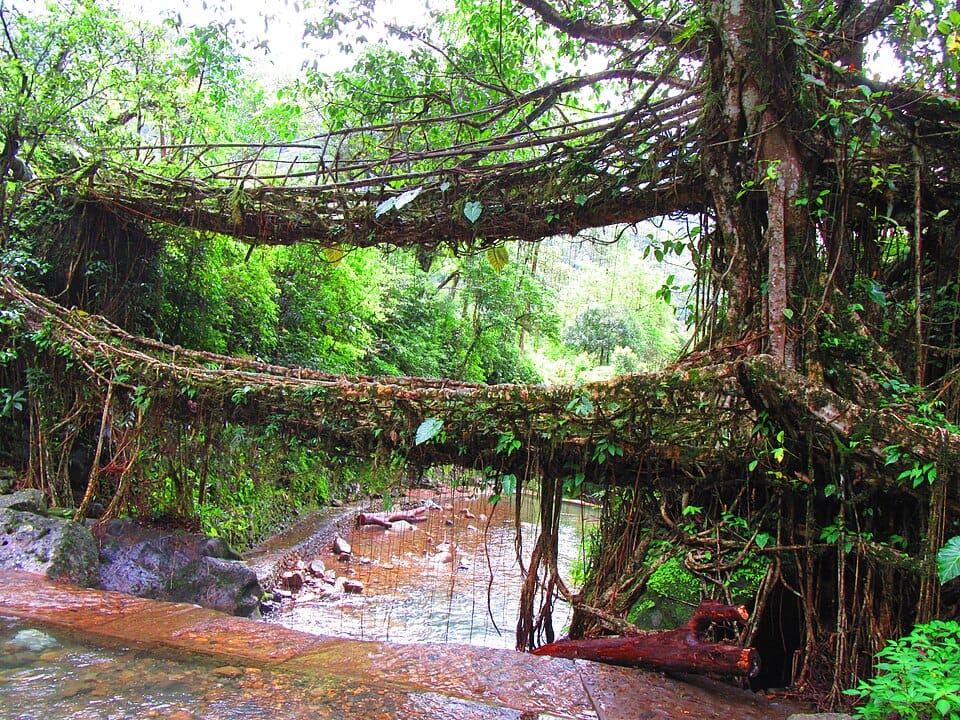
Our first major destination was Mawlynnong.Walking Across a Living Root Bridge
One of the most memorable experiences of the trip was visiting a Living Root Bridge.
Unlike conventional bridges built from concrete or steel, these remarkable structures are created using the living roots of rubber fig trees and shaped gradually by local communities.
It is an extraordinary example of how people and nature can work together.
Walking across one is not simply a sightseeing experience.
It is a reminder of the traditional knowledge and patience that have been passed down through generations.
Dawki: Where the River Looks Like Glass
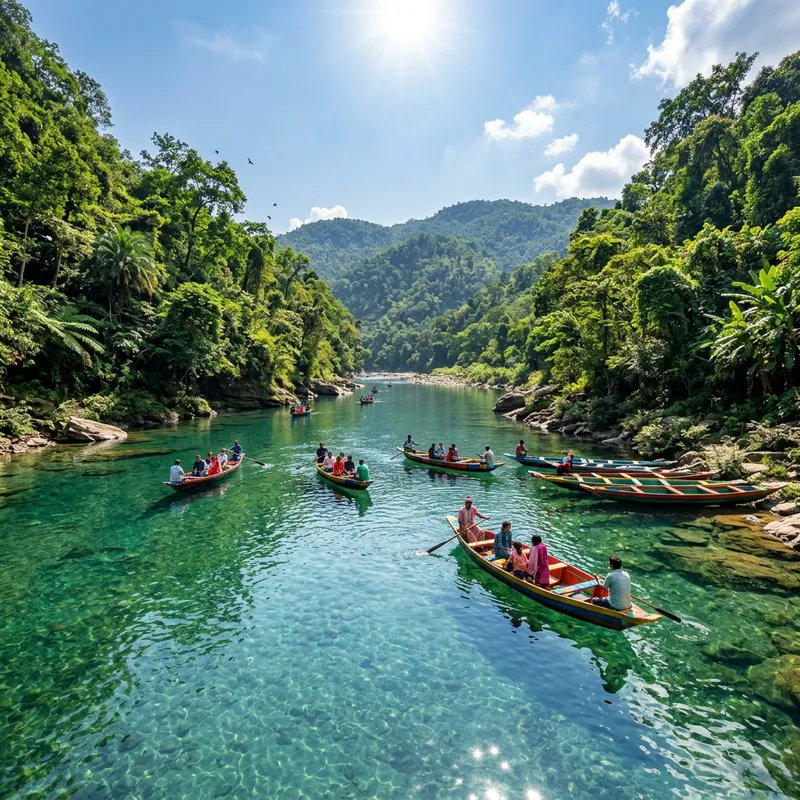
From Mawlynnong, we continued towards Dawki.
The landscape changed once again.
Dawki is famous for the Umngot River, particularly for its remarkably clear water.
When conditions are right, the river can appear almost transparent, making boats seem as though they are floating above the riverbed.
It was one of those moments when you take out your phone to capture a photograph, only to realise that the real view is far more impressive.
Tamabil and the Indo-Bangladesh Border
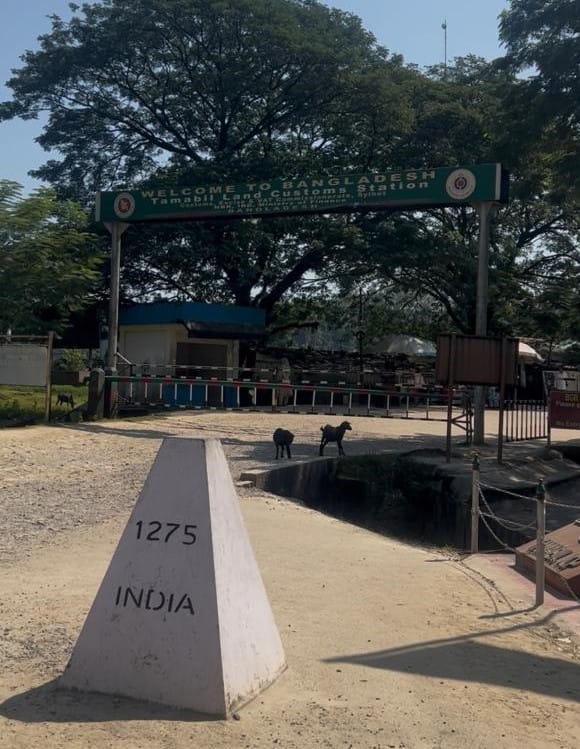
From Dawki, we continued towards Tamabil and the Indo-Bangladesh border.
Being so close to an international boundary gives the journey a different character.
The landscape remains beautiful, but there is also a sense of history and geography—standing at a place where two countries meet and seeing how naturally the landscape continues across the border.
It was a fascinating contrast to the waterfalls and forests we had experienced earlier in the trip.
Lumer Pynngad: The Final Adventure
Our final major stop was Lumer Pynngad.
By this stage of the journey, the road itself had become as important as the destinations.
The hills, forests and changing scenery continued to make every kilometre interesting.
There was no feeling of wanting to rush back.
But eventually, every road trip has to end.
From Lumer Pynngad, we began our return journey towards Guwahati through Khanapara.
As the hills gradually gave way to the plains, I realised just how much we had experienced in only three days.
What Made This Meghalaya Road Trip Special?
Looking back, it wasn’t one particular waterfall or viewpoint that made the trip memorable.
It was the variety.
In just three days, we experienced:
- Shillong’s mountain-city atmosphere
- The spectacular valleys of Laitlum
- The waterfall landscape of Sohra
- Kynrem Falls
- Dainthlen Falls
- Wei Sawdong Falls
- Nohkalikai Falls
- Prut Waterfall
- Janilar Natural Swimming Pool
- A peaceful Sohra homestay
- The village environment of Mawlynnong
- A Living Root Bridge
- The crystal-clear waters of Dawki
- Tamabil
- The Indo-Bangladesh border
- Lumer Pynngad
- And the scenic road back to Guwahati
It was not simply a sightseeing trip.
It was a journey through some of the many different faces of Meghalaya.
My Meghalaya Travel Experience: What I Would Recommend
If you are planning a Shillong–Sohra–Dawki itinerary from Guwahati, this route offers a practical way to experience Meghalaya’s major landscapes, waterfalls, villages and rivers in a short road trip.
Meghalaya is a destination where the journey between two attractions can be just as beautiful as the attraction itself.
Don’t plan every minute.
Leave room for unexpected viewpoints.
Stop when you see a beautiful valley.
Talk to local people.
Spend at least one night in a good homestay.
And most importantly, don’t treat the waterfalls as quick photo stops. Give yourself time to actually experience them.
Best time for a Meghalaya road trip
The ideal season depends on what you want to experience.
If waterfalls are your priority, the monsoon and post-monsoon period can offer dramatic scenery and powerful waterfalls. However, heavy rainfall can also affect road conditions and accessibility.
For clearer skies, easier driving and outdoor exploration, the drier months can be more comfortable.
Whatever season you choose, Meghalaya has something different to offer.
Final Thoughts: Why I Want to Return to Meghalaya
When I left Meghalaya and started driving towards Guwahati, I kept thinking about how much we had managed to experience in three days.
But strangely, it did not feel like enough.
There were still roads we had not taken, villages we had not explored, waterfalls we had not seen and countless mountain landscapes waiting beyond the next turn.
That may be the greatest thing about Meghalaya.
You don’t really finish exploring it.
You simply leave with a reason to come back.
For me, this three-day journey from Guwahati to Shillong, Laitlum, Sohra, Mawlynnong, Dawki and Lumer Pynngad was more than a holiday.
It was a reminder that sometimes the best travel experiences happen when you slow down, take the scenic road and let the mountains decide where you stop.
Meghalaya wasn’t just a destination on this trip. It was the journey itself.
Plan Your Meghalaya Journey with TripHubGo
If this journey has inspired you to explore Meghalaya, TripHubGo can help you plan your next Northeast India adventure.
From Shillong and Sohra to Meghalaya waterfalls, Dawki, Mawlynnong and beyond, explore Northeast India with itineraries designed around the places and experiences that make the region special.
Your Northeast journey begins with the road you choose to take.