
Assam is famous for its rivers, forests, grasslands and national parks, but some of its most fascinating wildlife experiences are found away from the better-known destinations.
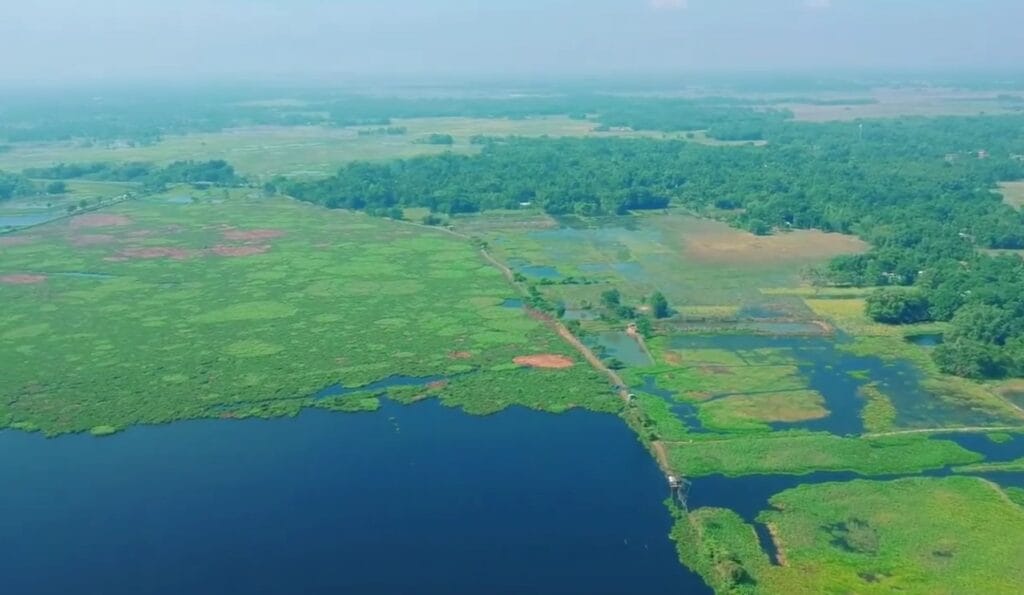
In the wetlands of Barpeta district, Kaapla Beel and Barkana Beel offer a different kind of Assam experience—one shaped by open water, aquatic vegetation, agricultural landscapes, local fishing communities and an impressive variety of resident and migratory birds.
For birdwatchers and wildlife photographers, these wetlands can be particularly rewarding during the winter months. Our photography trips to Kaapla and surrounding wetlands from 2014 to 2026 have produced a remarkable range of bird observations, including ducks, herons, storks, jacanas, kingfishers, raptors, waders and several less commonly encountered species.
This guide brings together the landscape, ecology, birding opportunities and practical travel information for anyone interested in discovering Kaapla Beel and Barkana Beel in Assam.
Field Note: The bird observations mentioned in this article include species recorded during our photography trips between 2014 and 2026. Their presence, abundance and seasonal occurrence can vary from year to year.
Table of Contents
- What Are Kaapla Beel and Barkana Beel?
- Where Are Kaapla and Barkana Beel?
- Kaapla Beel: Area, Landscape and Character
- Barkana Beel: Area and Wetland Landscape
- Why Are Kaapla and Barkana Beel Famous?
- Bird Diversity at Kaapla Beel
- Birds Recorded at Barkana Beel
- A Special Record: Spot Billed Pelican
- Ducks and Winter Visitors
- Waders, Herons, Storks and Waterbirds
- Raptors and Predatory Birds
- Kingfishers and Other Wetland Birds
- Fish Diversity of Kaapla Beel
- Why These Wetlands Matter to Local Communities
- Best Time to Visit Kaapla and Barkana Beel
- Best Time for Bird Photography
- How to Reach Kaapla Beel
- How to Reach Barkana Beel
- A Practical Birding Plan
- Photography Tips
- Responsible Birding and Wetland Etiquette
- Kaapla and Barkana Beel as a Photography Destination
- Final Thoughts
- Frequently Asked Questions
1. What Are Kaapla Beel and Barkana Beel?
The Assamese word “beel” is commonly used for a lake-like wetland or floodplain waterbody.
Kaapla Beel—also written as Kapla Beel—is a freshwater wetland in the Sarthebari area of Barpeta district, Assam. Scientific literature describes it as a wetland of the lower Brahmaputra valley surrounded by villages, agricultural land and other wetland habitats.
Barkana Beel is another freshwater floodplain wetland in Barpeta district. A study of its water characteristics describes it as a perennial floodplain wetland, naturally fed through the Barirjan/Bhojkhowa nala channel system.
Together, these wetlands form part of the wider wetland landscape of lower Assam, where water, agriculture, fisheries and bird habitats exist side by side.
2. Where Are Kaapla and Barkana Beel?
Both wetlands are located in Barpeta district of western Assam, within the lower Brahmaputra valley.
Kaapla Beel is associated with the Sarthebari revenue circle. Published studies place it approximately 4 km from Sarthebari and around 28 km from Barpeta town, while another study gives roughly 120 km from Guwahati.
Barkana Beel is also situated in Barpeta district. A published study places it approximately 80 km west of Guwahati and gives its area as about 248.42 hectares.
Because these are working rural wetlands rather than conventional developed tourist attractions, exact access points can vary. It is advisable to confirm the current local road condition and the appropriate access point before travelling.
3. Kaapla Beel: Area, Landscape and Character
Kaapla Beel is one of the notable freshwater wetlands associated with the Sarthebari region.
Published research has historically described the wetland as covering around 91 hectares. More recent land-use analysis found the mapped wetland area had reduced to about 61.42 hectares in 2022, with open-water area also declining substantially.
This change is important because a beel is not simply an attractive waterbody. It is an interconnected ecological system involving:
- Open water
- Aquatic vegetation
- Marshy areas
- Agricultural land
- Fish habitat
- Wetland birds
- Local communities
For photographers, the character of Kaapla changes considerably with season, water level, vegetation and bird movement.
4. Barkana Beel: Area and Wetland Landscape
Barkana Beel is a larger perennial wetland landscape in Barpeta district.
A scientific study describes it as a floodplain wetland covering approximately 248.42 hectares, naturally fed by the Barirjan/Bhojkhowa nala channel.
The combination of open water, wetland vegetation and surrounding agricultural landscapes creates suitable habitat for different groups of birds.
For bird photographers, Barkana can be particularly interesting because the habitat is not limited to open water. Depending on the season and exact location, the surrounding fields, grasses, shallow margins and wetland vegetation can produce completely different photographic opportunities.
Kaapla vs Barkana
| Feature | Kaapla Beel | Barkana Beel |
|---|---|---|
| Location | Sarthebari area, Barpeta district, Assam | Barpeta district, Assam |
| Wetland Type | Freshwater wetland | Perennial floodplain wetland |
| Approx. Published Area | Historically about 91 hectares; mapped at about 61.42 hectares in 2022 | About 248.42 hectares |
| Main Interest | Waterbirds, ducks, fish and bird photography | Wetland birds, grassland-edge birds and bird photography |
| Birding Season | October–March | October–March |
| Photography Opportunities | Waterbirds, ducks, jacanas and raptors | Wetland birds and agricultural-edge birds |
| Special Field Records | Ruddy Shelduck, January 2015 | Spot-billed Pelican, April 2018 |
5. Why Are Kaapla and Barkana Beel Famous?
Kaapla and Barkana are not famous in the same way as Assam’s major wildlife destinations and national parks.
Their attraction is more specialised.
They are important because they combine:
- Wetland bird habitat
- Migratory bird activity
- Resident waterbirds
- Local fisheries
- Aquatic vegetation
- Rural landscapes
- Bird photography opportunities
- Seasonal changes in wetland ecology
Historical reporting from Barpeta has also identified Barkana, Kaapla and other wetlands in the region as destinations for migratory birds as well as sources of indigenous fish. Kaapla and Barkana are also part of the lesser-known side of Assam that many travellers miss when they focus only on the state’s better-known attractions.
For photographers, however, their greatest value lies in the combination of species diversity and changing wetland conditions.
6. Bird Diversity at Kaapla Beel
Our photography trips to Kaapla between 2014 and 2026 produced records of a wide variety of wetland and associated bird species. For photographers looking beyond these wetlands, our guide to wildlife photography spots in Assam covers several other habitats and destinations.
These observations should be viewed as a field record rather than a guarantee that every species will be present during every visit.
Among the birds recorded at Kaapla were:
Ducks and Waterfowl
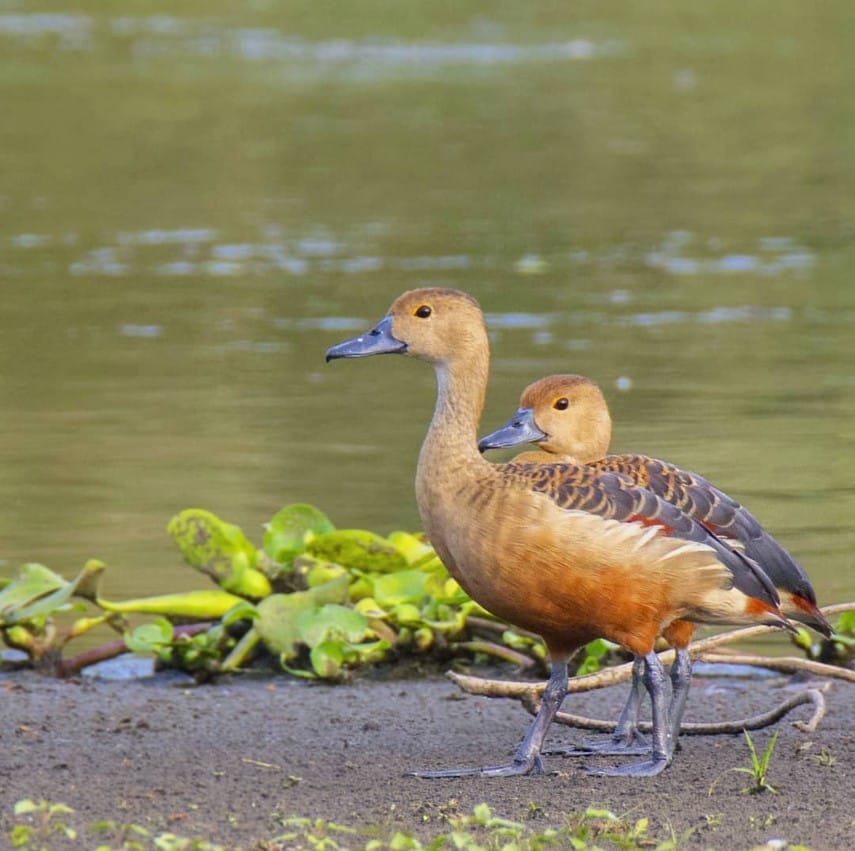
- Lesser Whistling Duck
- Ferruginous Duck
- Tufted Duck
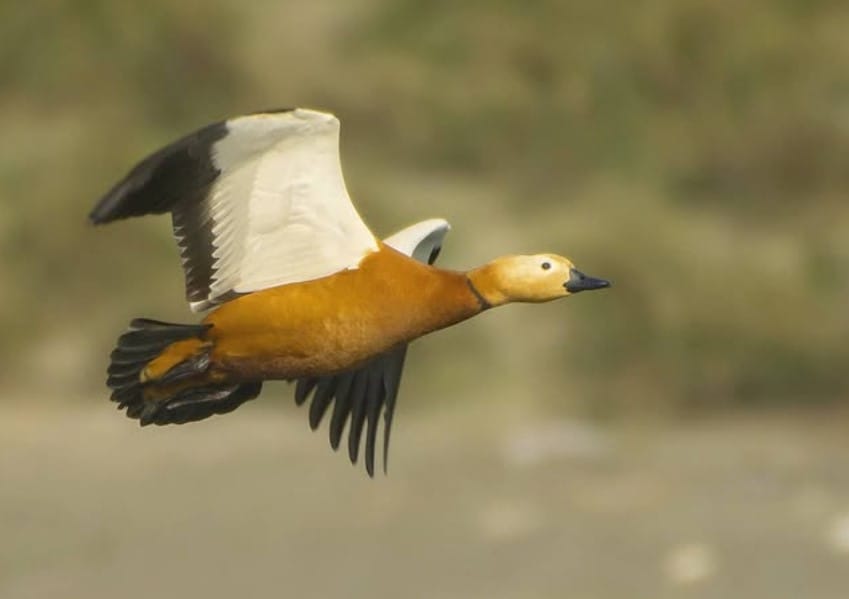
- Ruddy Shelduck
- Gadwall
- Eurasian Wigeon
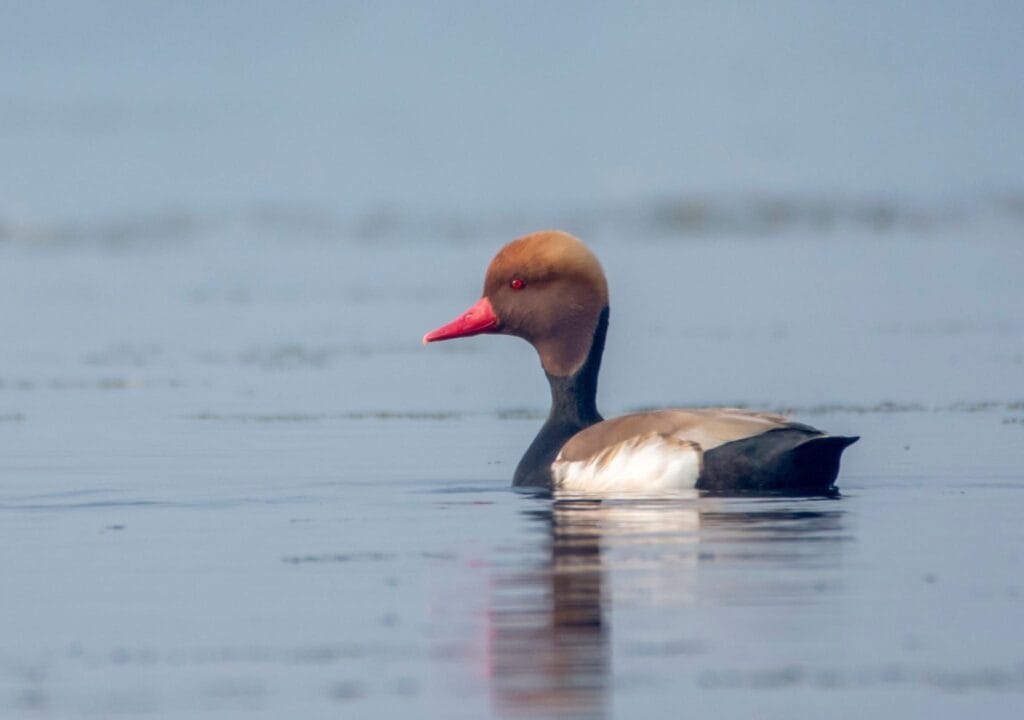
- Red-crested Pochard
- Ferruginous Pochard
- Northern Pintail
- Eurasian Teal
- Garganey
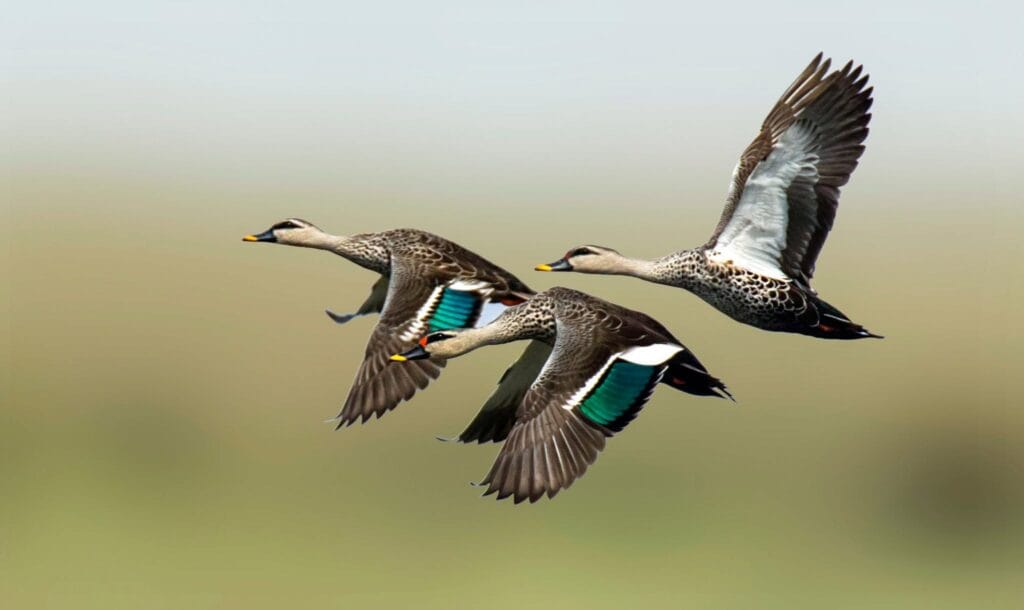
- Indian Spot-billed Duck
One particularly memorable observation was Ruddy Shelduck in January 2015, based on our photography records.
7. Storks, Herons, Egrets and Cormorants
The shallow waters and wetland margins of Kaapla also provide habitat for a variety of large waterbirds.
Our field observations include:
- Asian Openbill
- Lesser Adjutant
- Purple Heron
- Grey Heron
- Egrets
- Little Cormorant
- Great Cormorant
- Oriental Darter
- Glossy Ibis
- Black-headed Ibis
- Spot-billed Pelican
The presence of large waterbirds adds another dimension to the photographic possibilities at Kaapla.
A feeding heron standing among aquatic vegetation can produce a very different image from a flock of ducks moving across open water.
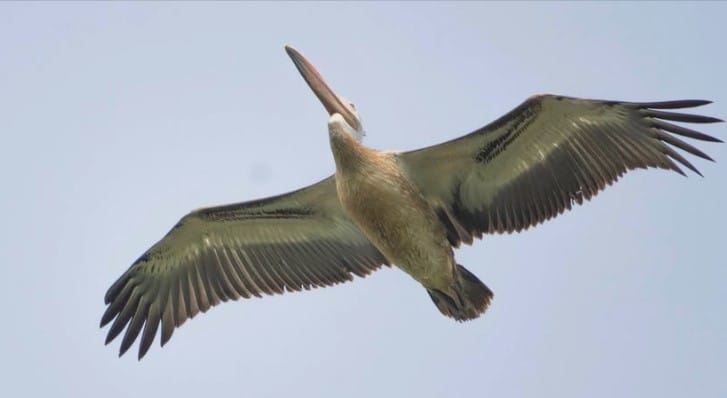
Our only recorded sighting of a Spot-billed Pelican at Barkana Beel was on 1 April 2018, photographed by Imran Ahmed and Hedeat Ullah.
8. Jacanas, Moorhens, Coots and Other Wetland Birds
The aquatic vegetation around a beel creates habitat for species that are particularly interesting to photograph.
Our Kaapla records include:
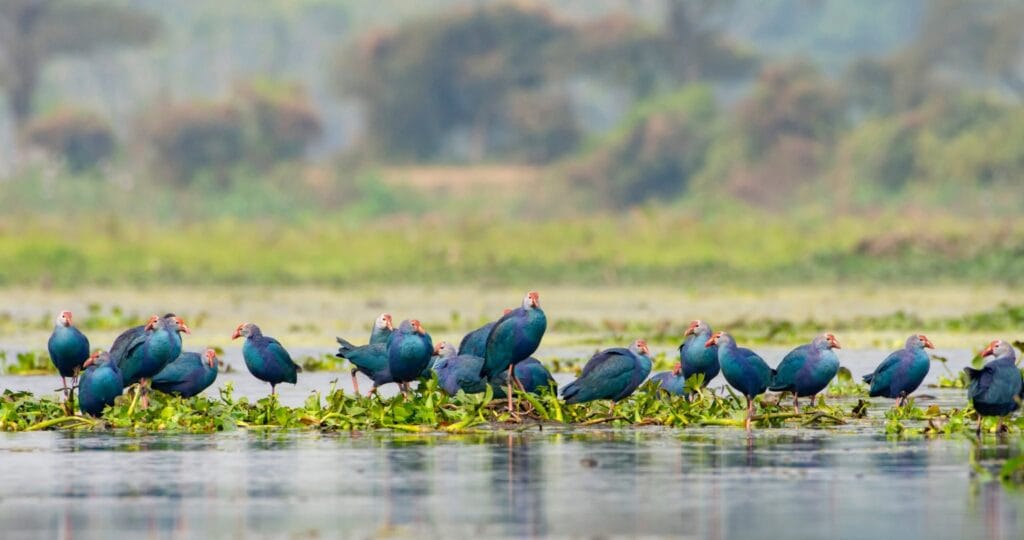
- Purple Moorhen
- Purple Swamphen
- Common Coot
- Pheasant-tailed Jacana
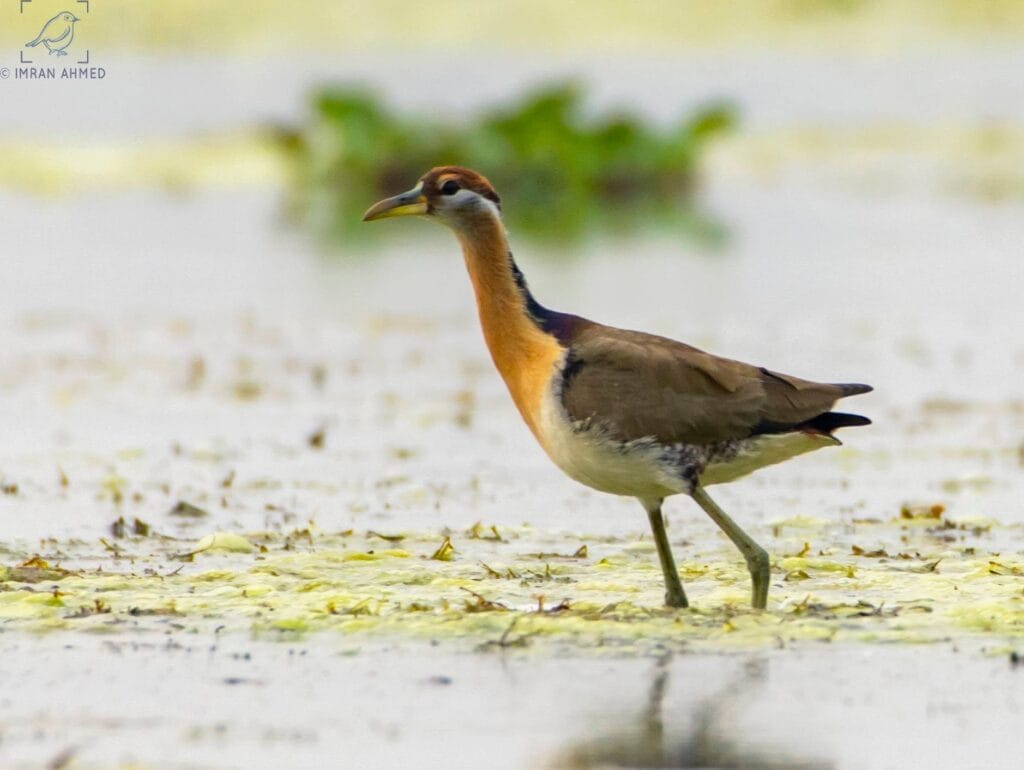
- Bronze-winged Jacana
- Little Grebe
- Little Ringed Plover
- Red-wattled Lapwing
- Northern Lapwing
- Common Sandpiper
- Green Sandpiper
- Common Redshank
Jacanas are especially fascinating because their exceptionally long toes allow them to walk across floating vegetation.
9. Raptors and Birds of Prey
Wetlands are not only about ducks and waders.
They also support predators that use the open landscape to search for fish, frogs, small birds and other prey.
During our photography trips, we recorded:
- Black Kite
- Black-winged Kite
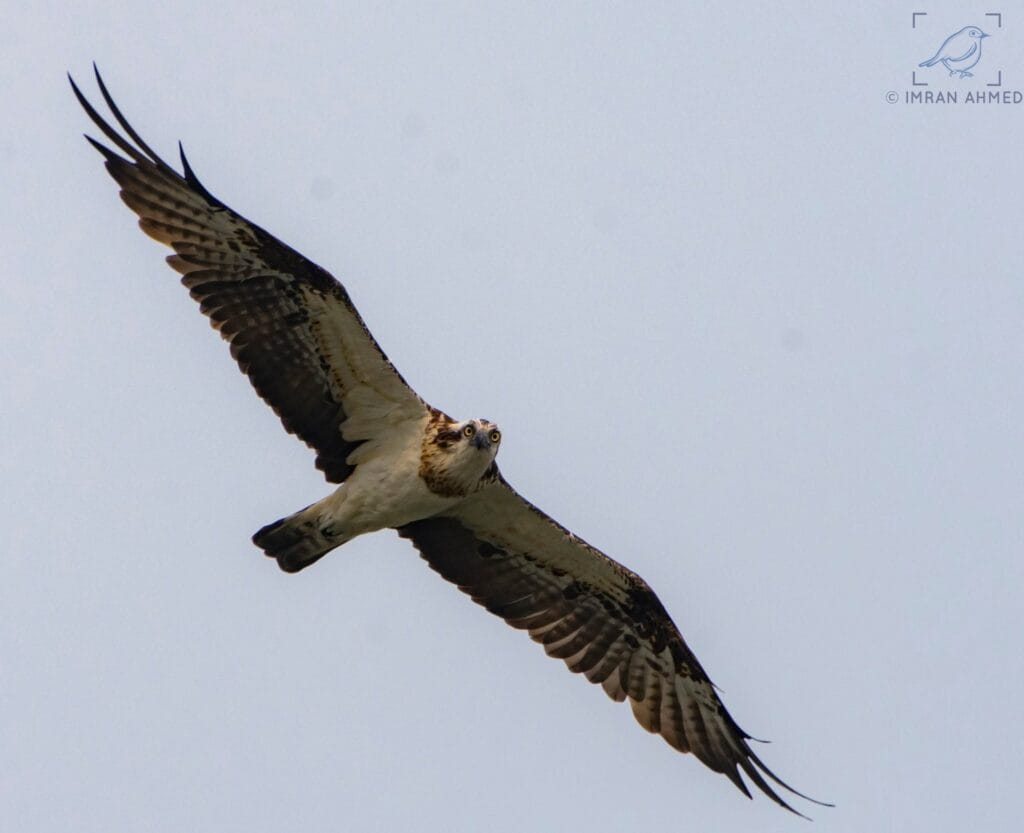
- Osprey
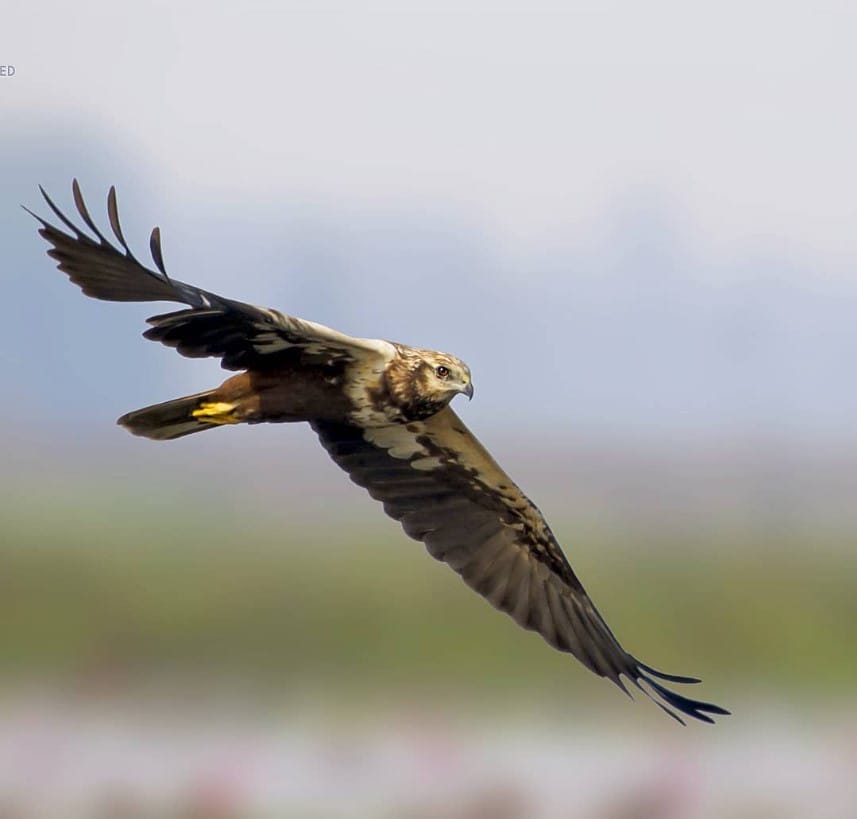
- Marsh Harrier
The Osprey is particularly associated with aquatic habitats because of its specialised fishing behaviour.
10. Kingfishers and Other Birds
The wetland environment also supports several colourful and insectivorous species.
Birds recorded during our Kaapla photography trips include:
- Pied Kingfisher
- Common Kingfisher
- White-throated Kingfisher
- Stork-billed Kingfisher
- Common Hoopoe
- Green Bee-eater
- Indian Roller
- Yellow-footed Green Pigeon
- White-rumped Shama
- Ashy Woodswallow
- Common Hawk-Cuckoo
- Dusky Warbler
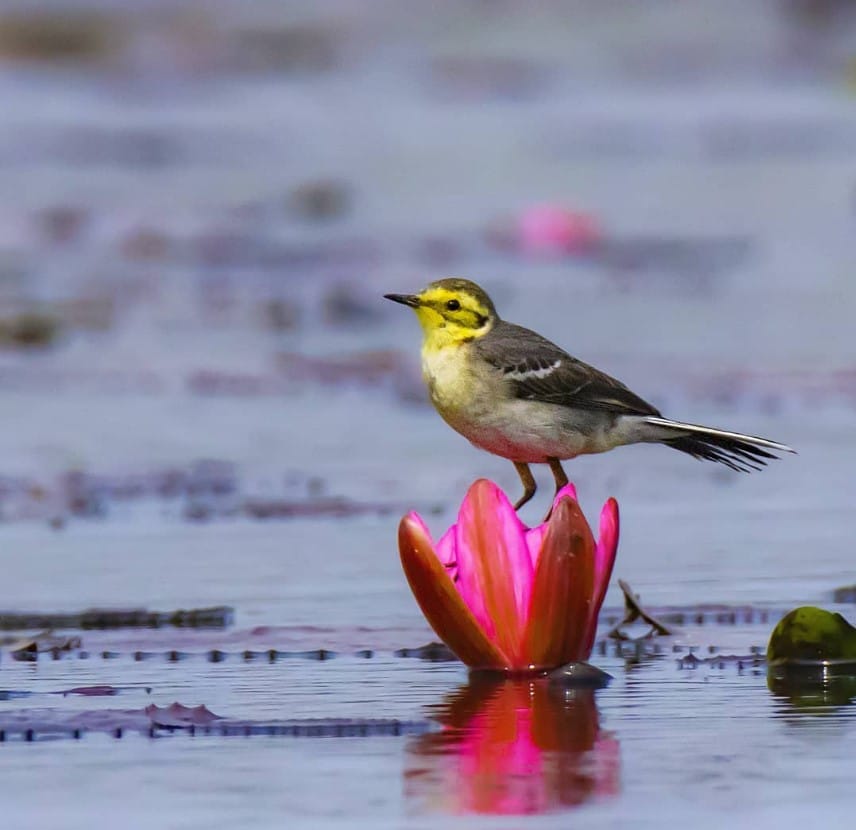
- White Wagtail
- Citrine Wagtail
- Zitting Cisticola
- Clamorous Reed Warbler
- Paddyfield Pipit
- Olive-backed Pipit
- Asian Palm Swift
This demonstrates why birding around Kaapla should not be restricted to the open water.
11. Birds Recorded at Barkana Beel
Barkana offers another set of wetland and agricultural habitats.
Birds recorded during our Barkana field visits include:
- Pallas’s Grasshopper Warbler
- Paddyfield Pipit
- Olive-backed Pipit
- Common Redshank
- Black-winged Kite
- Clamorous Reed Warbler
- Green Bee-eater
- Garganey
- Indian Spot-billed Duck
- Pin-tailed Snipe
- Eurasian Teal
- Ruddy Shelduck
- Zitting Cisticola
- Black-naped Monarch
- Cinnamon Bittern
- Indian Roller
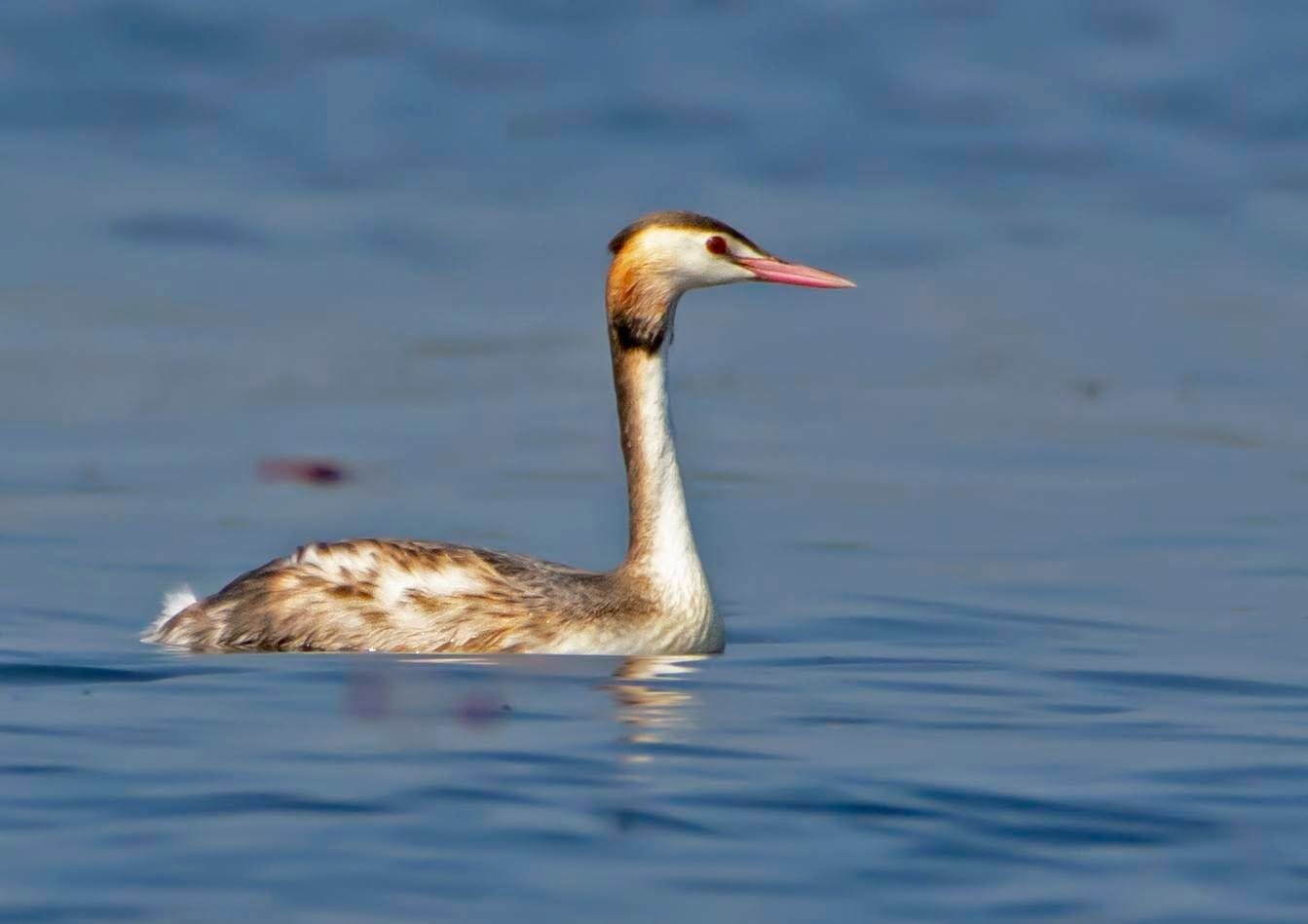
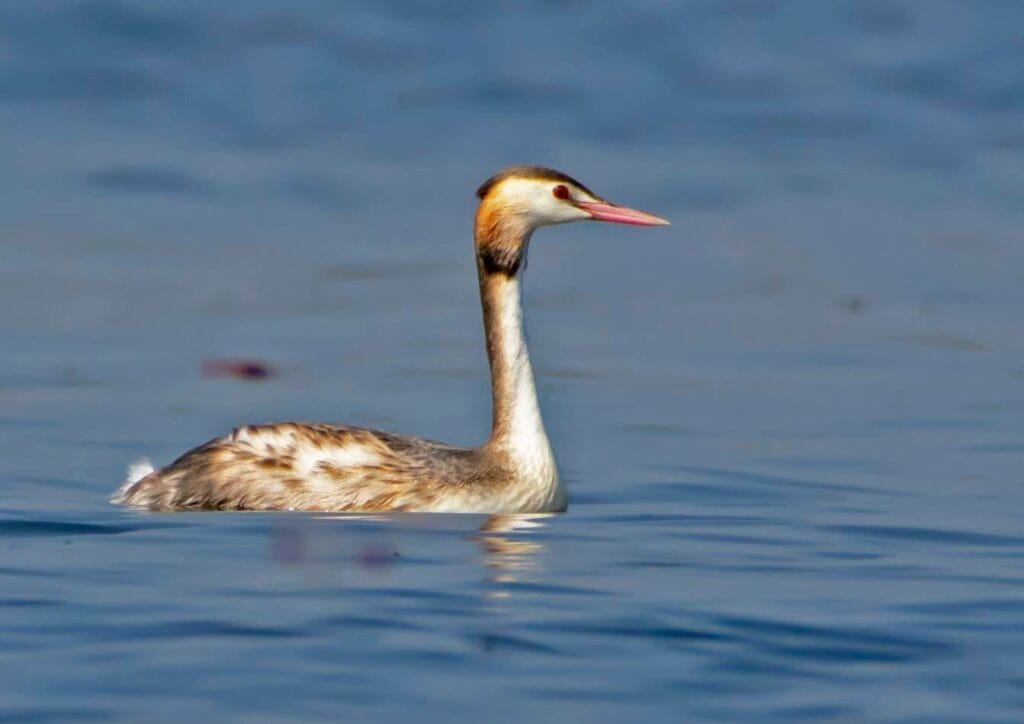
- Crested Grebe
The combination of wetland edges and adjoining fields is particularly valuable for finding species that do not spend all their time on open water.
12. A Special Record: Pallas’s Grasshopper Warbler at Barkana
Among the most interesting records from Barkana is Pallas’s Grasshopper Warbler, also known as the Rusty-rumped Warbler.
Its scientific name is Helopsaltes certhiola. This is a species that can be difficult to locate because of its secretive behaviour and preference for dense grassland and wetland-edge vegetation. Our Barkana record makes this species an especially interesting part of the area’s birding story.
The species is recognised in Indian biodiversity resources under the name Pallas’s Grasshopper Warbler, and specialist birding literature also describes it as a scarce winter visitor in parts of India.
13. The Fish Diversity of Kaapla Beel
Birds are only one part of the ecological importance of Kaapla.
The wetland is also associated with a diverse freshwater fish community and has traditionally supported local fisheries.
Research on Kaapla has recorded species including:
- Rohu (Labeo rohita)
- Gonia (Labeo gonius)
- Catla (Catla catla)
- Chital (Chitala chitala)
- Striped snakehead (Channa striata)
- Spotted snakehead (Channa punctata)
- Singhi (Heteropneustes fossilis)
- Kalbasu (Labeo calbasu)
- Boal (Wallago attu)
Other published material on Kaapla has documented indigenous fish such as Kawai, Magur, Singhi, Sol, Puthi, Khalihana and Barali, demonstrating the breadth of its aquatic biodiversity. The wetland’s fish resources are significant not only ecologically but also economically. However, recent research has identified pressures including increasing aquatic weed growth, blocked feeder channels, embankments, overfishing and agricultural pollution, with declining fish production noted over time.
This makes Kaapla’s conservation story particularly important.
14. Why These Wetlands Matter to Local Communities
A beel is much more than a birdwatching location. This is part of the wider relationship between Assam’s wetlands and wildlife.
Wetlands provide:
- Fish and other aquatic resources
- Water storage
- Habitat for wildlife
- Agricultural support
- Livelihood opportunities
- Ecological services
- Seasonal resources for surrounding communities
Studies of Kaapla show that households around the wetland depend directly or indirectly on wetland resources. This relationship between people and wetlands is one of the reasons responsible tourism matters. Visitors should enjoy the landscape without disturbing fishing activity, damaging aquatic vegetation or entering restricted/private areas without permission.
15. Best Time to Visit Kaapla and Barkana Beel
October to March: Best for Birding
For birdwatchers and photographers, the cooler months are generally the most interesting period.
Winter can bring migratory waterfowl and other seasonal visitors, while resident birds remain present throughout the broader wetland landscape. If you’re planning a broader wildlife itinerary, you can also explore our Assam wildlife tour covering Manas, Kaziranga and Nameri.
November to February: Prime Photography Period
This period can offer:
- Winter ducks
- Waders
- Open-water birds
- Raptors
- Migratory species
- Pleasant early-morning light
- Misty rural landscapes
However, bird numbers and species composition vary between years.
Monsoon and Post-Monsoon
The wetland changes dramatically during and after the monsoon.
Water levels, aquatic vegetation and access conditions can change, producing a completely different landscape.
For serious bird photographers, visiting at different times of year can therefore be worthwhile.
16. Best Time of Day for Bird Photography
For photography, early morning is generally the most productive period.
Try to reach the wetland around sunrise.
The first few hours can provide:
- Softer light
- Lower temperatures
- Active birds
- Better opportunities for feeding behaviour
- Reflections on calm water
- Atmospheric landscapes
17. How to Reach Kaapla Beel
Kaapla Beel is located in the Sarthebari area of Barpeta district.
From Guwahati, the journey involves travelling towards the Barpeta–Sarthebari side of western Assam before continuing towards the local villages around the wetland.
Kaapla is reported to be around 4 km from Sarthebari and around 28 km from Barpeta town. Published research places it roughly 120 km from Guwahati, although the actual driving distance depends on the route and access point used.
Practical advice
Because Kaapla is not operated like a conventional tourist attraction with a single formal entrance, it is better to:
- Confirm the local access point before departure.
- Check road conditions.
- Ask locally about photography access.
- Avoid entering private agricultural land.
- Carry sufficient food and drinking water.
- Carry binoculars and a telephoto lens.
- Start early.
Planning a Kaapla Beel visit?
We have first-hand experience of the Kaapla route from years of photography trips. If you need help with the route, access points, birding locations, photography opportunities or planning a Kaapla–Barkana visit, you can contact TripHubGo directly on WhatsApp.
👉 Get Kaapla Beel Route & Birding Support on WhatsApp
18. How to Reach Barkana Beel
Barkana Beel is also located in Barpeta district.
A published study places it approximately 80 km west of Guwahati and describes it as a large perennial floodplain wetland.
The exact approach should be selected according to the part of Barkana being explored.
For serious bird photography, local guidance can be particularly useful because the most productive birding locations may change according to water levels, vegetation and seasonal conditions.
19. A Practical Kaapla–Barkana Birding Plan
If you are planning a dedicated photography trip, consider spending at least one full day exploring the two wetlands rather than trying to rush through them.
Morning
5:30–6:00 AM
Start for the wetland.
6:00–9:30 AM
Focus on:
- Ducks
- Jacanas
- Herons
- Storks
- Cormorants
- Kingfishers
- Raptors
Late Morning
Explore the surrounding fields and wetland margins.
Look for:
- Pipits
- Wagtails
- Cisticolas
- Reed warblers
- Bee-eaters
- Raptors
Afternoon
Take a break and revisit the most productive habitat later in the day.
Evening
Look for:
- Returning waterbirds
- Raptors
- Kingfishers
- Silhouettes
- Sunset landscapes
20. Photography Tips for Kaapla and Barkana
These wetlands are particularly suitable for photographers carrying a telephoto lens.
Recommended equipment
- 300mm or longer telephoto lens
- 400mm/500mm/600mm lens where available
- Monopod or tripod
- Binoculars
- Extra batteries
- Memory cards
- Rain protection
- Lens cloth
- Field notebook
Keep your distance
Do not approach birds simply to obtain a closer frame.
A photograph taken from a respectful distance is preferable to disturbing the bird.
Use the landscape
Do not photograph every bird as a tight portrait.
Try:
- Environmental portraits
- Birds with reflections
- Birds against sunrise
- Feeding behaviour
- Flight shots
- Groups of waterfowl
- Birds interacting with aquatic vegetation
21. Responsible Birding and Wetland Etiquette
Kaapla and Barkana are living wetlands, not photographic sets.
Visitors should:
- Keep noise low.
- Avoid chasing birds.
- Avoid playback unless permitted and appropriate.
- Never throw food to attract birds.
- Do not damage vegetation.
- Do not litter.
- Respect fishermen and farmers.
- Stay away from nesting sites.
- Avoid entering private land without permission.
- Follow local instructions.
- Use established roads and paths wherever possible.
The long-term value of these wetlands depends on maintaining the habitats that attract the birds in the first place.
22. Kaapla and Barkana Beel as a Photography Destination
What makes these wetlands special is not simply the number of species recorded here. It is the combination of biodiversity, seasonality and landscape. On one visit, you may spend your morning photographing ducks. On another, the highlight may be jacanas and swamphens walking across floating vegetation.
On another day, an Osprey may suddenly appear over the water, or you may witness a Pied Kingfisher hovering before diving for its prey.
The surrounding fields may produce pipits, wagtails and grassland birds, while the wetland margins can hold herons, egrets, reed warblers and bitterns. This is one reason Assam offers opportunities for wildlife photography beyond the major national parks.
And sometimes, a relatively inconspicuous bird such as a Pallas’s Grasshopper Warbler can become the most memorable sighting of the trip.
That unpredictability is one of the great attractions of wetland bird photography.
23. Our Kaapla and Barkana Field Experience: 2014–2026
Field Experience:
TripHubGo’s photography team has visited Kaapla and Barkana Beel repeatedly between 2014 and 2026, documenting wetland birds, migratory waterfowl and other species across different seasons.
Our photography journeys between 2014 and 2026 have given us the opportunity to observe these wetlands across different seasons and changing conditions.
Over those years, Kaapla and Barkana have provided encounters with an extensive variety of waterbirds, migratory ducks, waders, raptors, kingfishers, grassland birds and wetland specialists.
The records mentioned in this guide are therefore presented from the perspective of first-hand photography and field observation, rather than as a claim that every listed species occurs at the same frequency today.
Wetlands are dynamic ecosystems.
Water levels change.
Vegetation changes.
Migration patterns change.
Human activity changes.
That is precisely why returning to the same wetland year after year can reveal something new.
Watch Our Kaapla Beel Birding & Photography Video
See Kaapla Beel from the air and get a closer look at the wetland landscape in our Kaapla Beel birding and photography video.
24. Frequently Asked Questions
Is Kaapla Beel the same as Kapla Beel?
Yes. Kaapla Beel is also commonly written as Kapla Beel or Kapla Bil. For SEO, TripHubGo can use “Kaapla Beel” as the primary spelling while mentioning “Kapla Beel” naturally in the introduction.
Where is Kaapla Beel located?
Kaapla Beel is located in the Sarthebari area of Barpeta district, Assam, in the lower Brahmaputra valley.
Where is Barkana Beel?
Barkana Beel is located in Barpeta district of Assam and is a perennial floodplain wetland.
What is Kaapla Beel famous for?
Kaapla is known for its wetland biodiversity, birds, fish resources and rural wetland landscape.
What birds can be seen at Kaapla Beel?
Our photography records include ducks, storks, herons, egrets, cormorants, jacanas, lapwings, kingfishers, raptors, waders and several other wetland and grassland birds.
What is the best time to visit Kaapla Beel?
For winter birding, October to March is the most useful period to consider, with November to February particularly attractive for migratory waterbirds.
Can Kaapla Beel be visited for bird photography?
Yes. The wetland and its surrounding habitats can provide excellent opportunities for bird photography, particularly when approached quietly and responsibly.
What makes Barkana Beel interesting for birders?
Barkana combines perennial wetland habitat with surrounding agricultural and wetland-edge environments and has produced records of both waterbirds and less conspicuous grassland species.
Is Pallas’s Grasshopper Warbler found at Barkana?
Our photography records include a Pallas’s Grasshopper Warbler observation at Barkana. Because bird occurrence varies seasonally and annually, this should be treated as a field record rather than a guarantee of sighting.
Plan a Birding & Photography Trip in Assam
If you want to explore lesser-known wetlands of Assam with a customised route, TripHubGo can help plan a trip around bird photography, wildlife, wetlands and Northeast India travel.
A customised route can combine Kaapla and Barkana with other suitable birding and wildlife destinations depending on the season, road conditions and your photography interests.
Want to photograph Assam’s lesser-known wetlands? Contact TripHubGo for a customised birding and photography itinerary.
WhatsApp: 7002817758
Email: support@triphubgo.com
Nicely Written. Very helpful for visitors.